A 538-Square-Foot Paris Pied-à-Terre Filled with Curiosities
Comments
No comments yet. Be the first to comment.
Loading…
No comments yet. Be the first to comment.
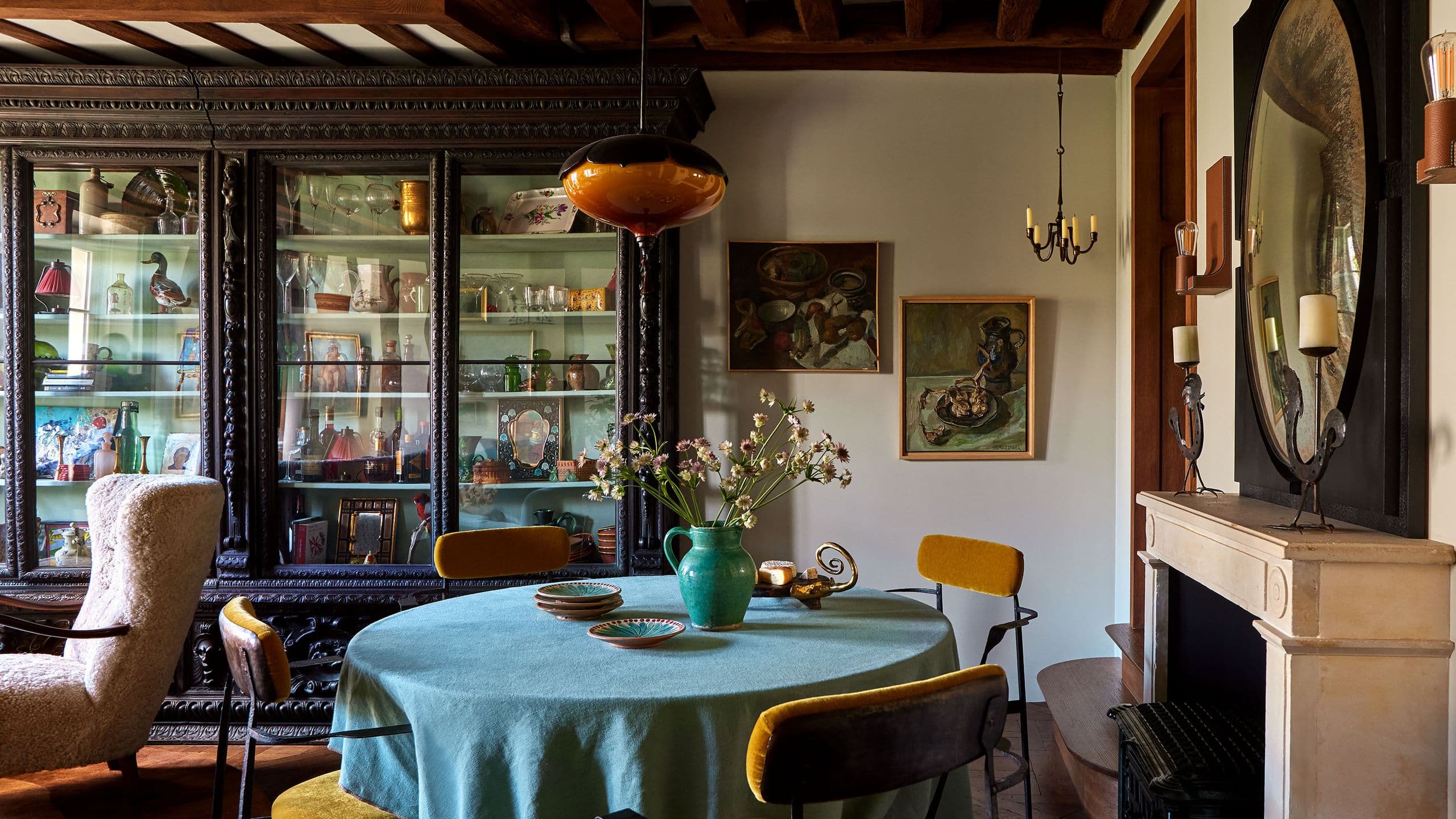
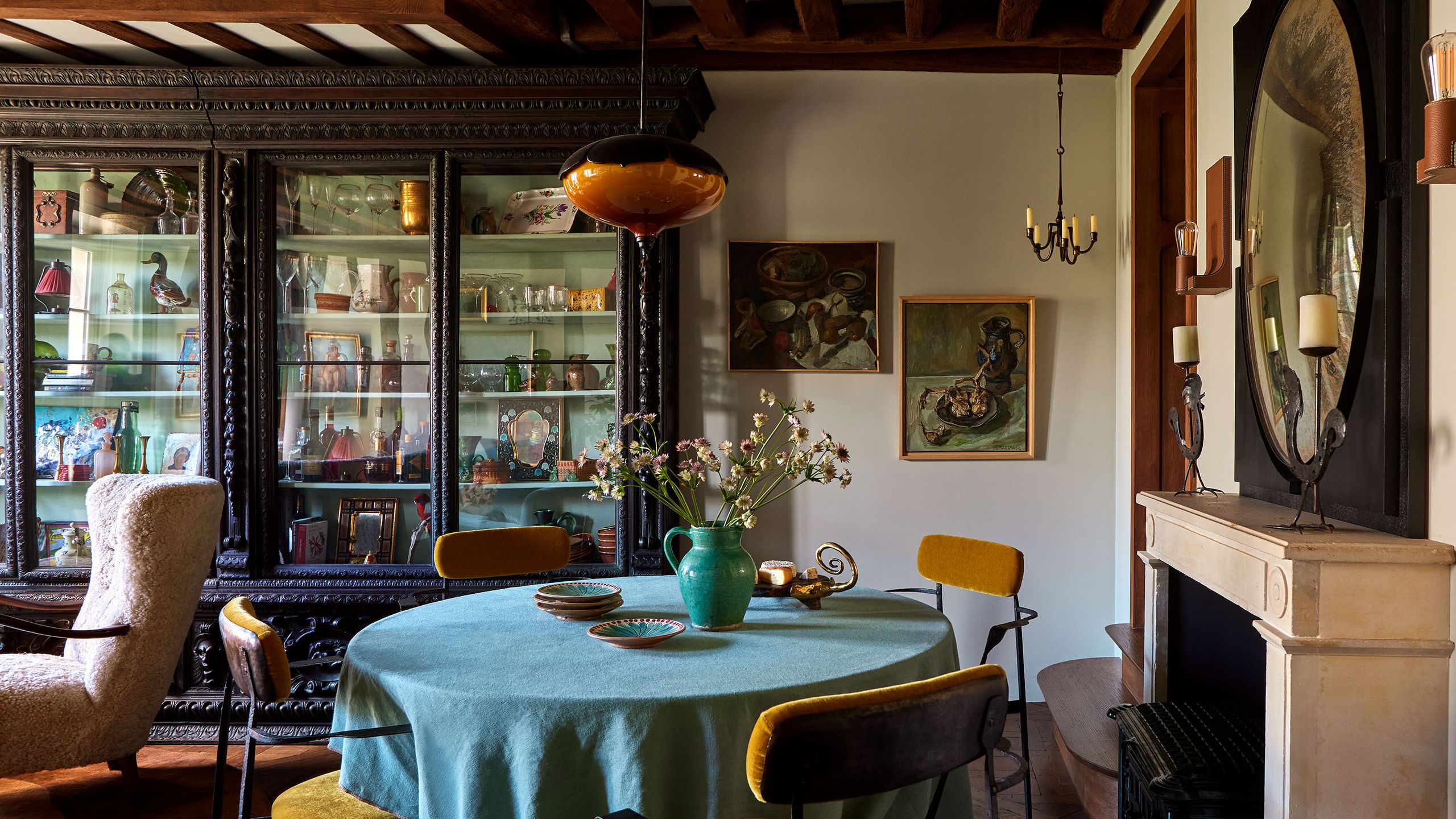
For a couple who work in the sciences and wanted their Paris apartment to feel like a cabinet of curiosities, a seventeenth-century cabinet makes a natural anchor. It fills one wall of the 538-square-foot home, its dark carved frame enclosing shelves of glassware, pottery, and small objects. Across the room, an oval mirror hangs above the mantel; a blue-green cloth spreads across the dining table. The furnishings are abundant, but the arrangement gives the eye a place to settle. Jessica Helgerson’s design turns the couple’s request for a cabinet of curiosities into a practical organizing idea: collect the many things in a few intentional places, then leave room to live around them.
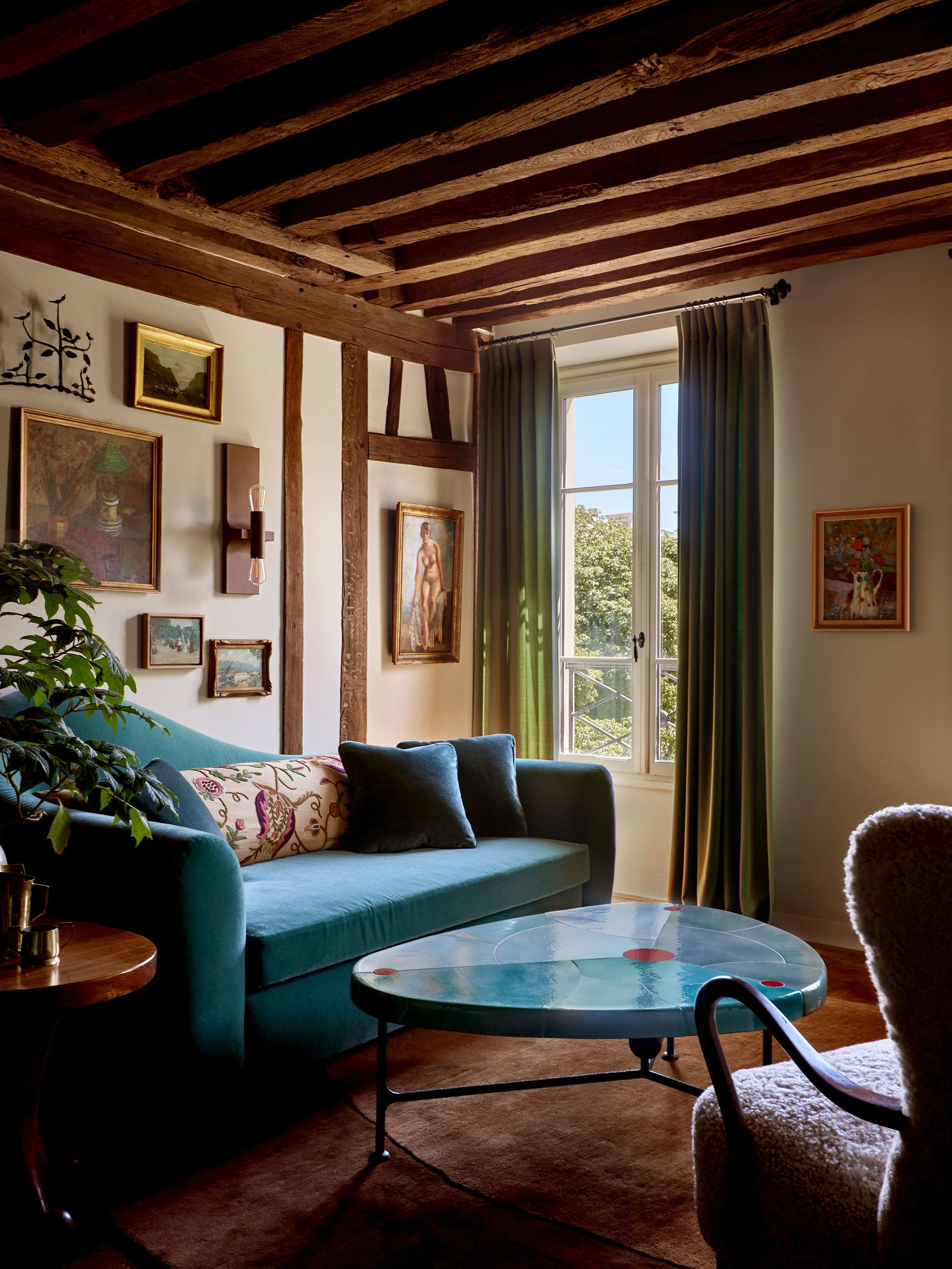
The apartment sits on Place Dauphine, a place the American owners came to love during their wedding in Paris. The small one-bedroom home became a second home, so it had to make visits comfortable without pretending to offer more space than it has. Historic timber beams remain visible overhead. Tall windows bring in daylight and views of neighboring façades, while green curtains soften the light and add privacy. A teal sofa and sheepskin-covered chairs make the living room usable for lounging; a custom sleeper sofa can accommodate guests.
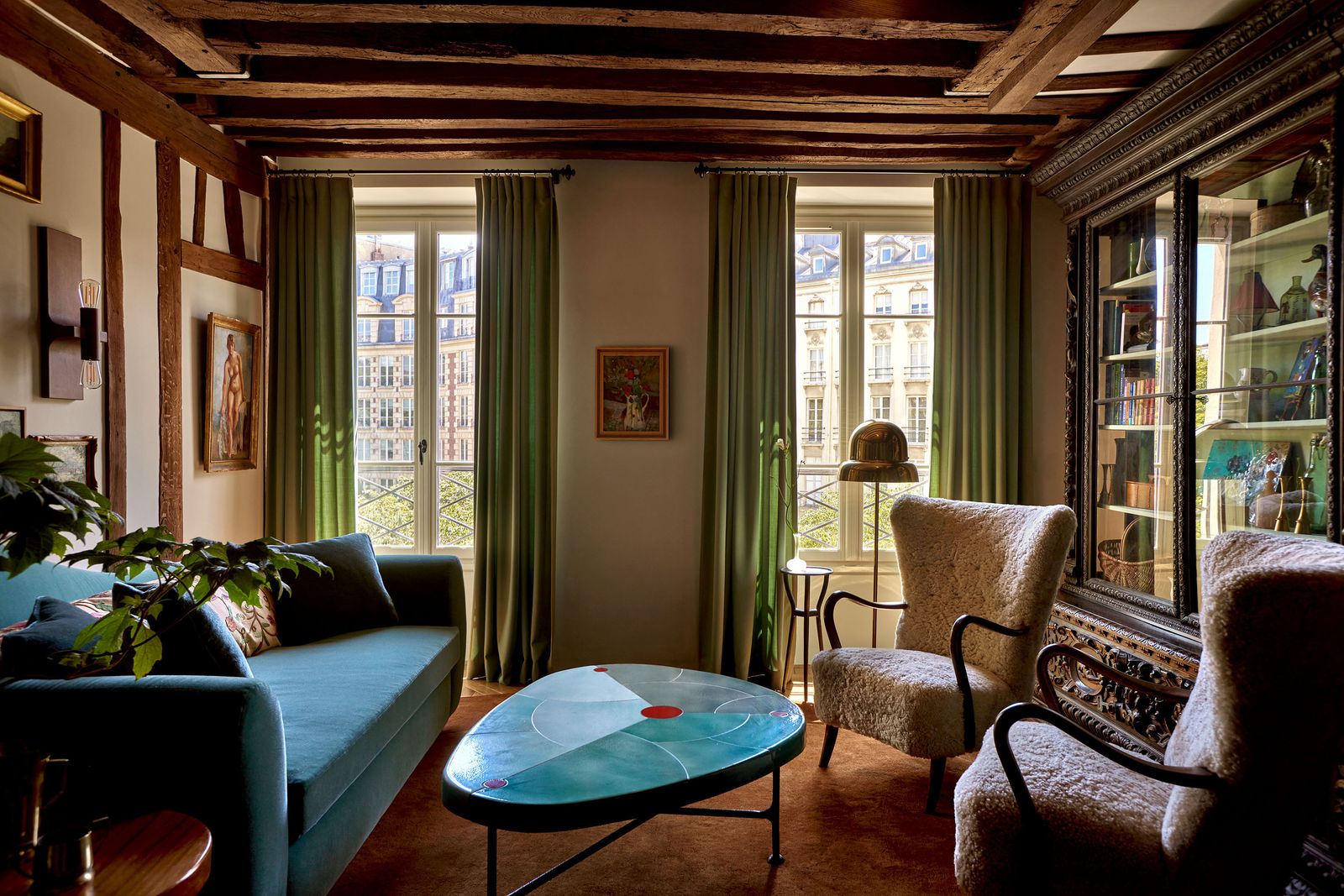
A single blue-green note links the rooms without making them feel identical. It appears on the sofa and the coffee table, then returns in the leaded glass at the entry and in the kitchen. On the coffee table, red circles and pale lines echo the patterned glazing. Seen through the doorways, those small repetitions help the compact plan read as connected. The broad cabinet’s green-lined shelves also provide a designated place for the owners’ collections, keeping smaller surfaces from becoming storage by default and preserving open space around the furniture.
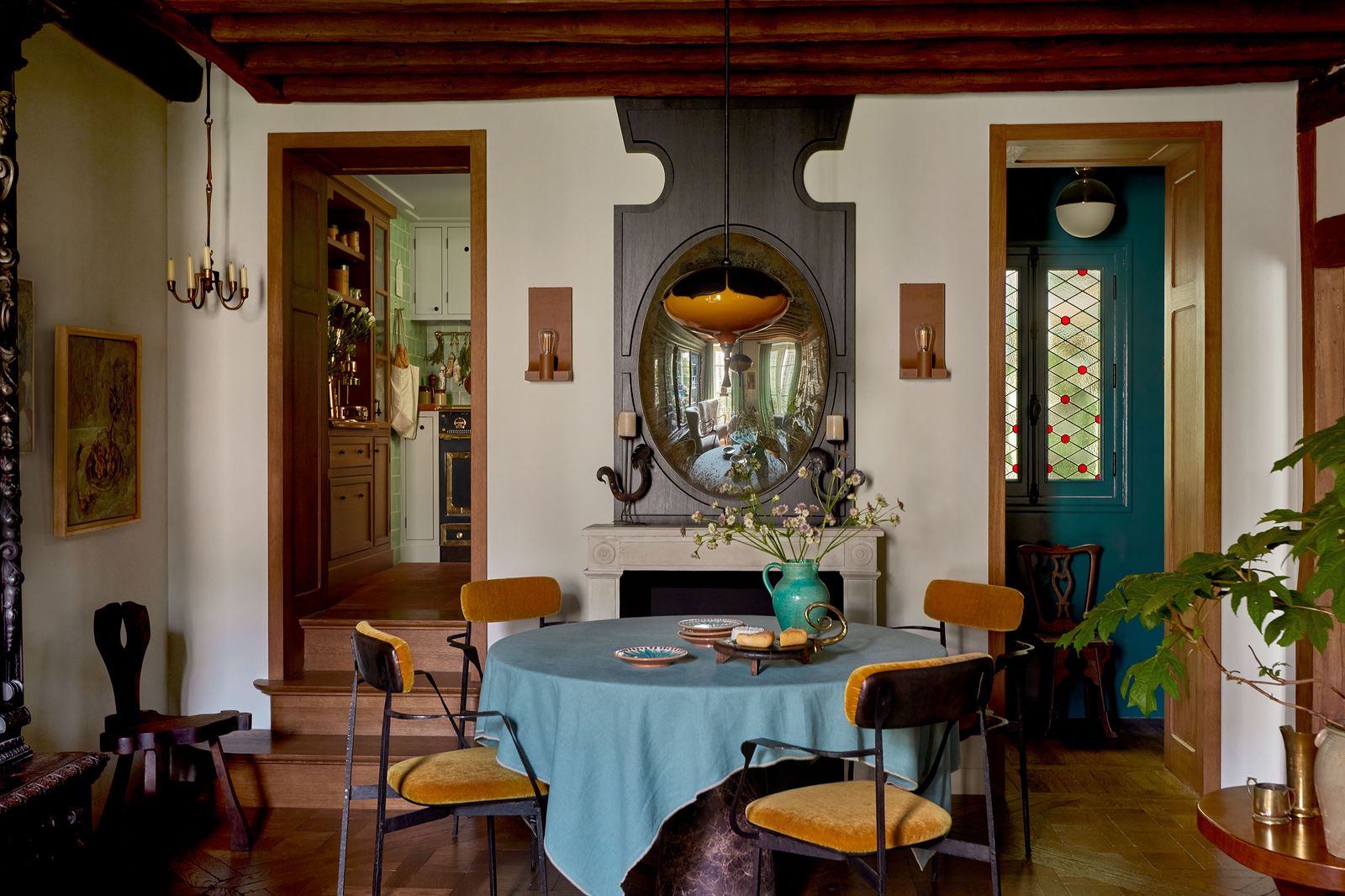
The dining room is also a junction. From the table, the kitchen opens on one side and the entrance on the other. An ebonized mirror above the mantel takes its profile from the cabinet’s base; a pair of leather sconces and a brass candelabra add light at different heights. These details give the room its own character, while the repeated wood, glass, and blue-green tones make the transitions feel deliberate.
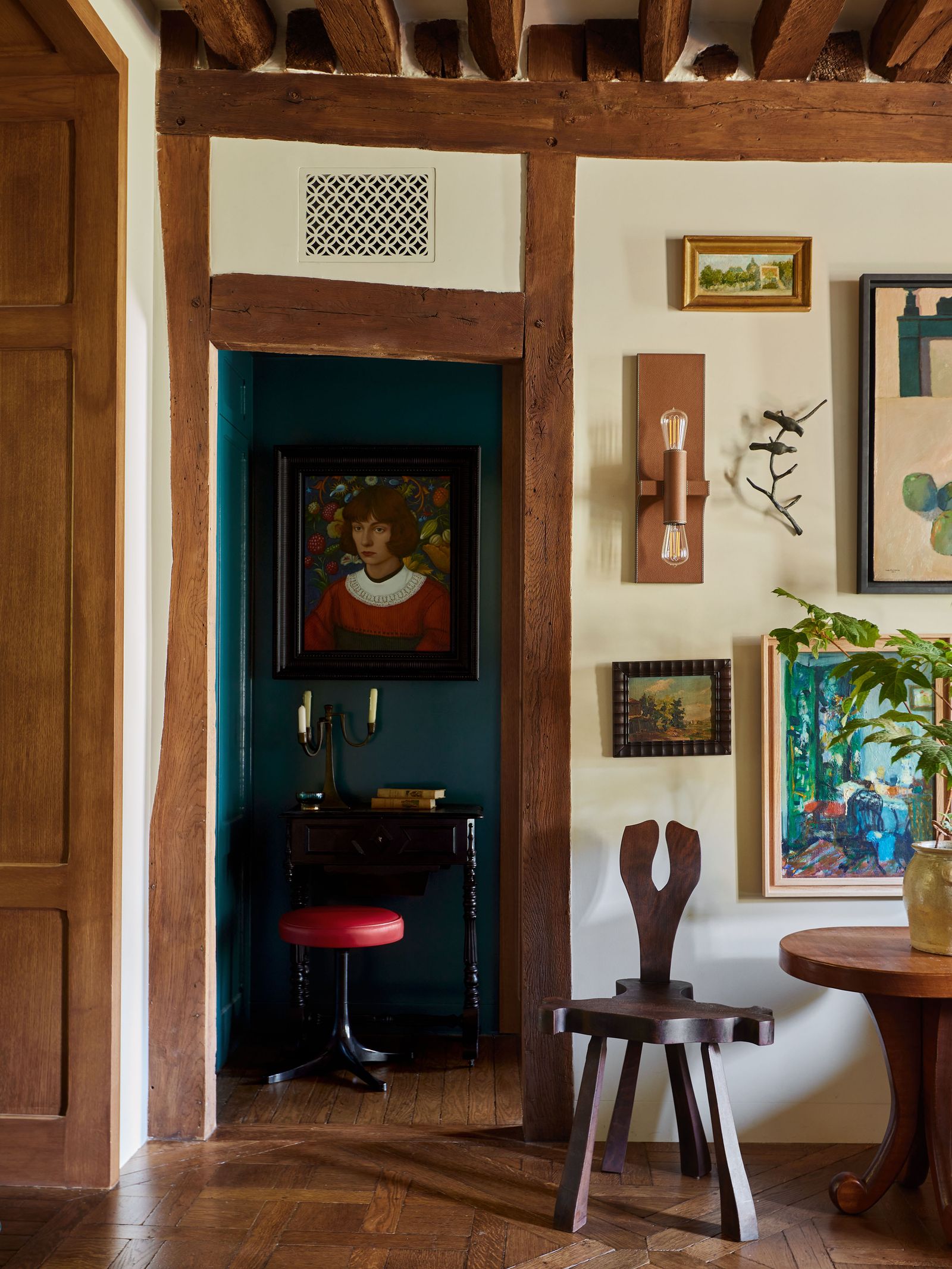
An alcove in the hall turns a narrow stretch of circulation into a small work spot. A desk fits beneath a portrait, with a red stool tucked in front; the deep blue-green wall gives this corner a boundary without requiring another room. It is a useful way to give a secondary task a home rather than spread it across the dining table.
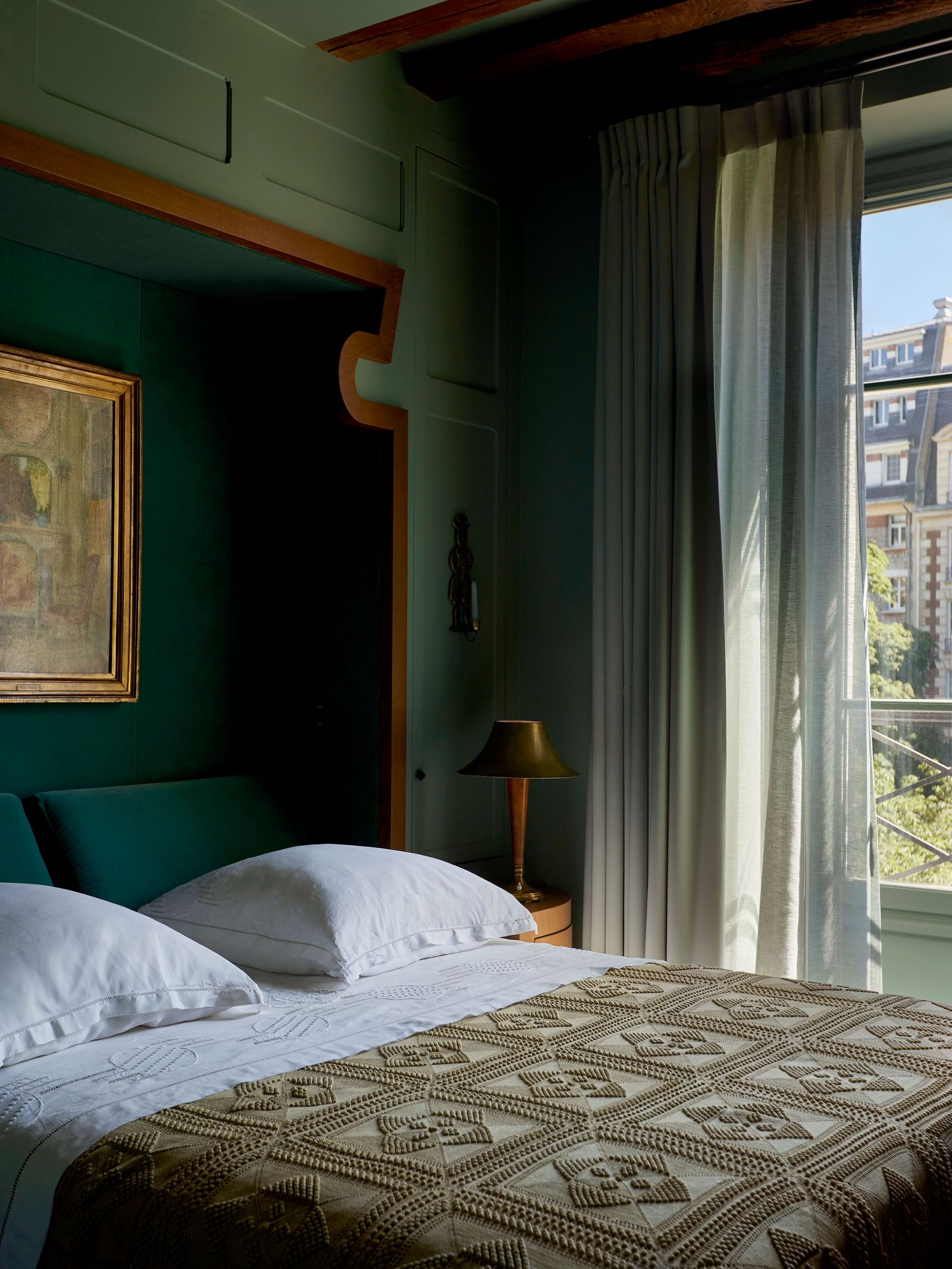
The bedroom is kept quiet and focused on sleep and storage. Helgerson adapted a disused chimney flue into a recessed bed niche, using the existing depth to make the bed feel fitted to the room. Green walls and the sculpted opening frame the bed; pale antique linen and a restrained bedside lamp keep the small room from competing with the more layered living area.
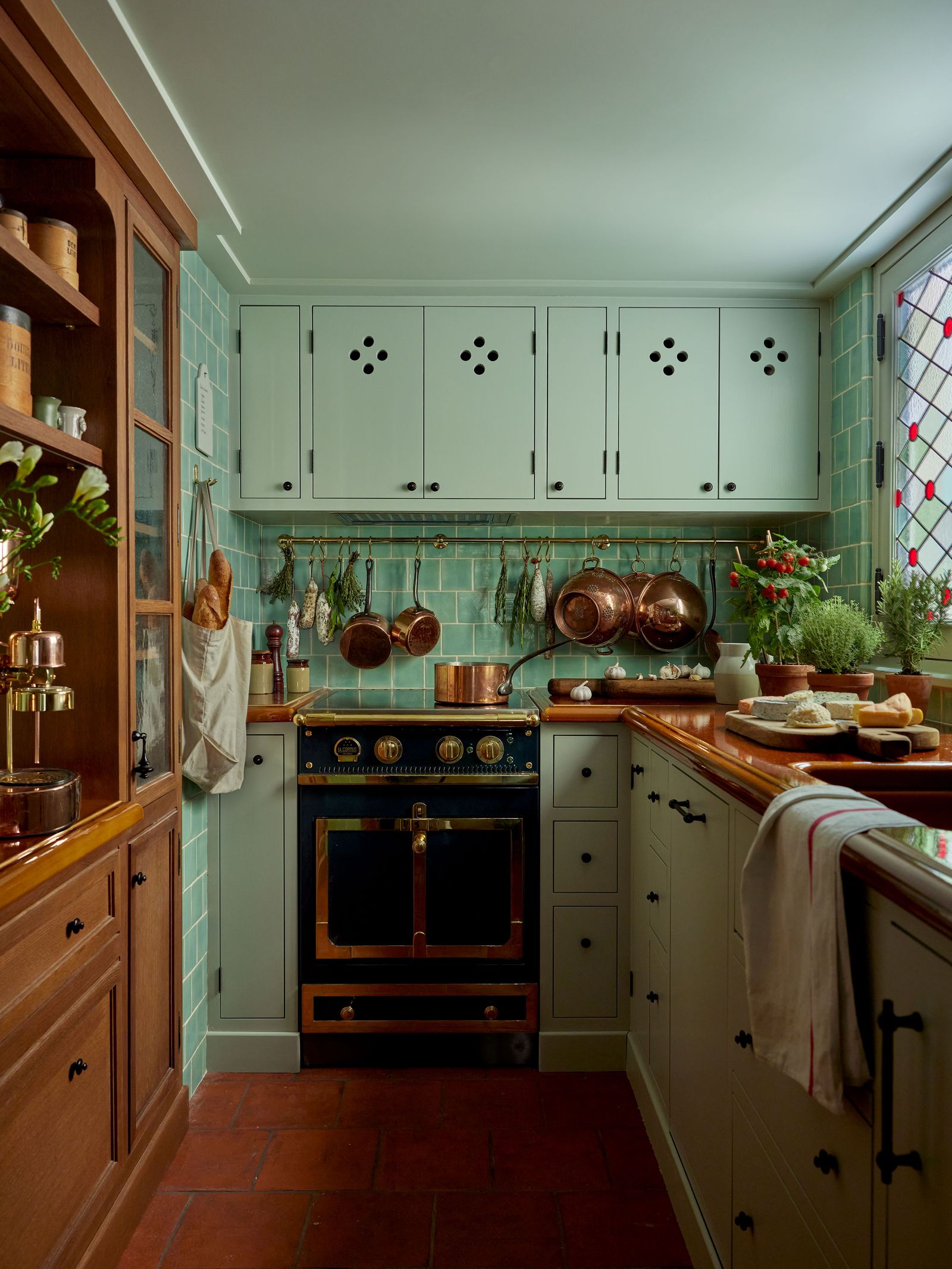
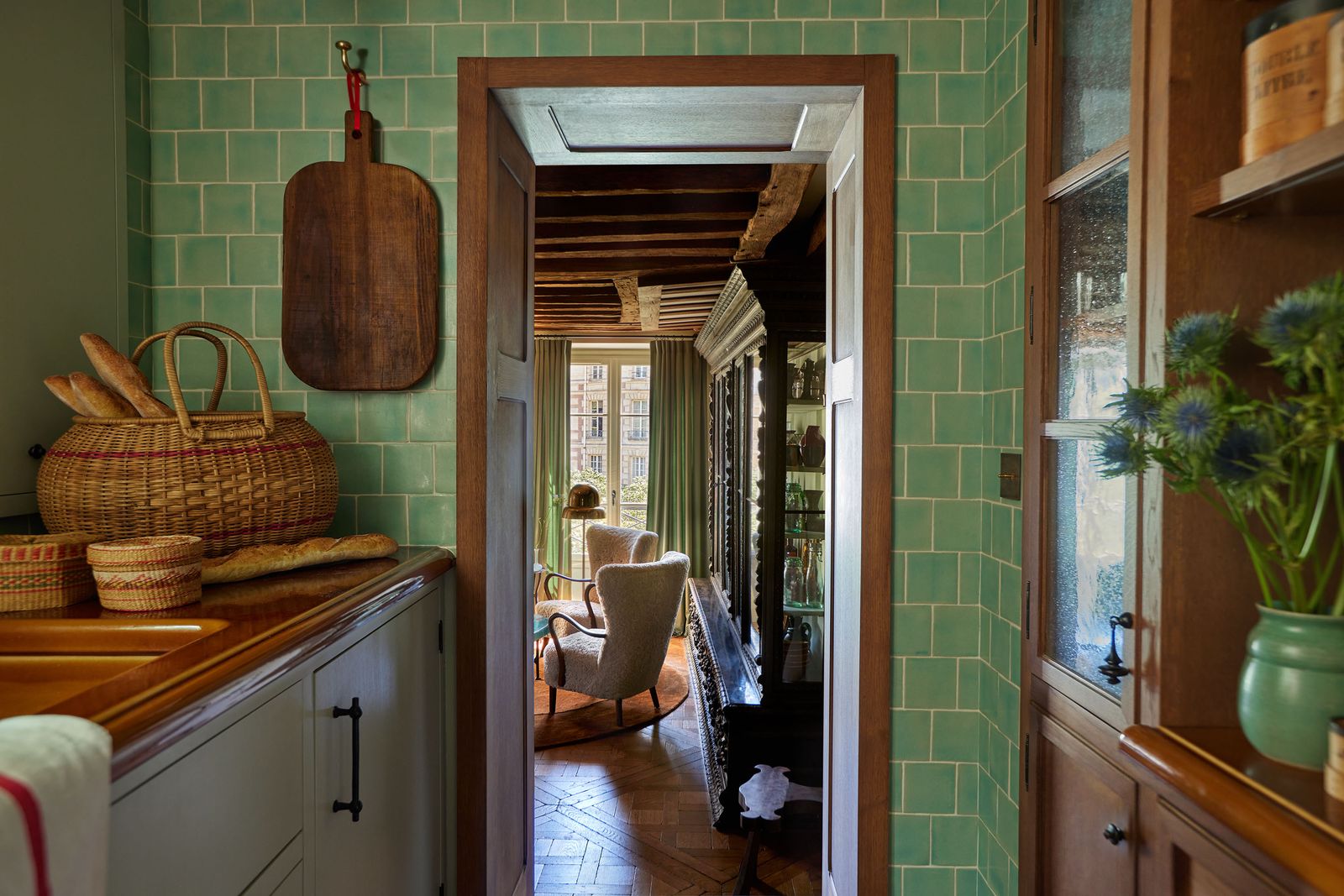
In the kitchen, cabinetry reaches high and runs along both sides, making the narrow room work hard. Glazed green tiles continue across the walls, while terracotta floor tiles and a wood counter warm the palette. The leaded window filters an unattractive view toward an elevator shaft. Its pattern, adapted from the building’s exterior railing, repeats at the entrance and on the living-room table. A custom enameled lava-stone counter adds a durable work surface in a less expected material.
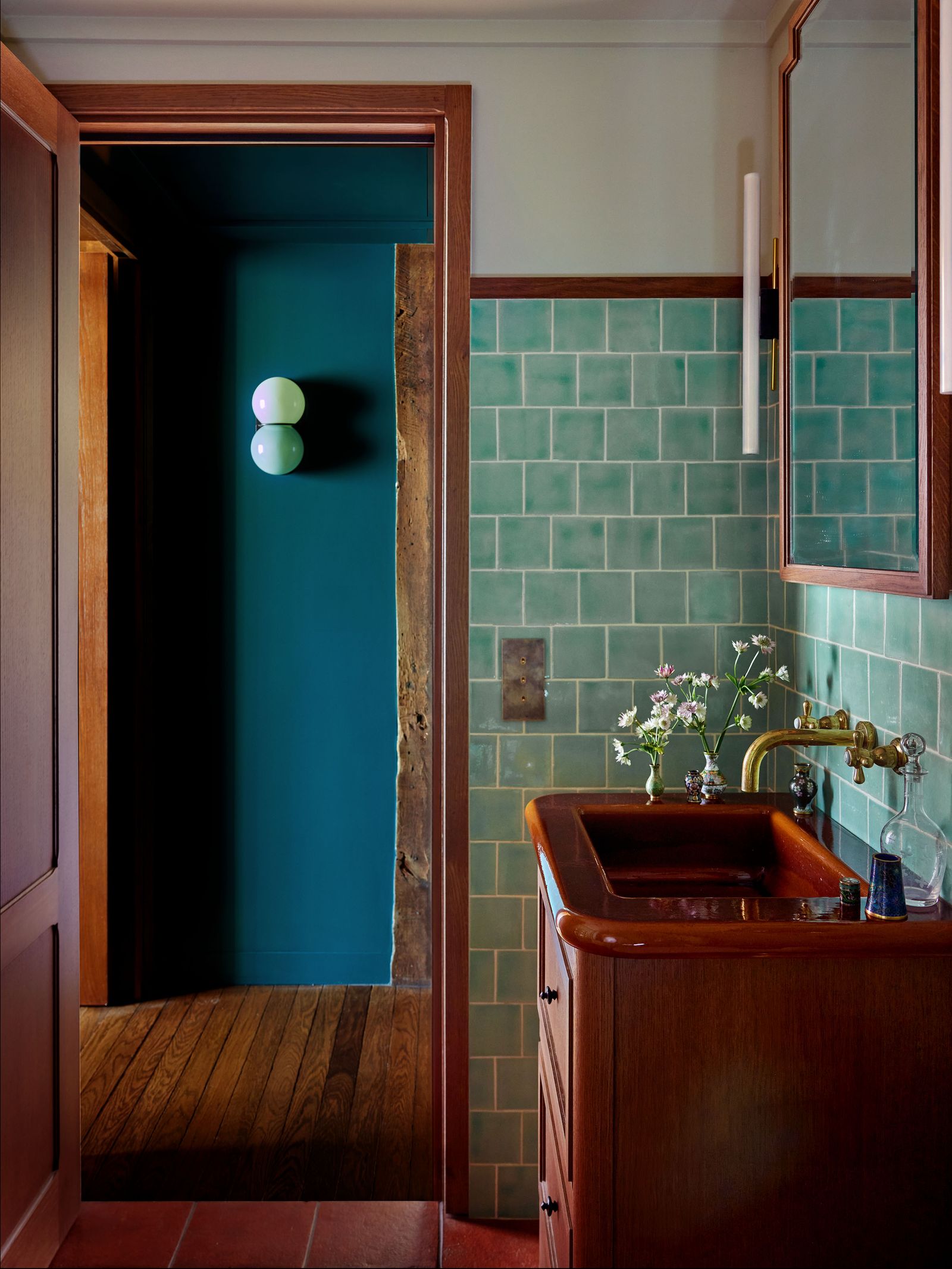
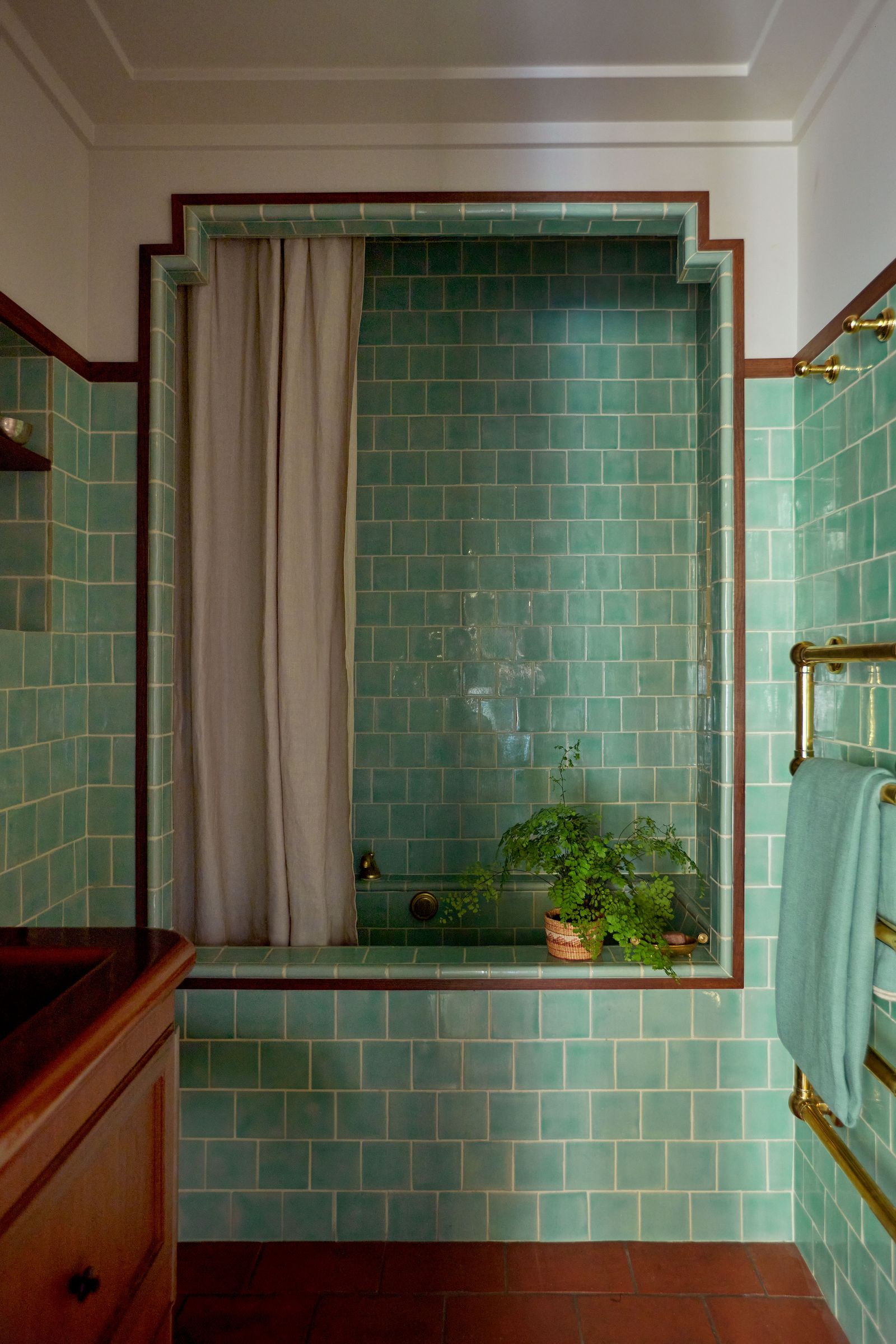
The bathroom carries the green tile and terracotta underfoot into a room with an enameled tub. Reusing those finishes makes the small apartment feel continuous, while the deep blue-green doorway gives the bath its own threshold. The overall palette is limited, but its textures shift from tile to linen, glass, timber, and velvet. That variety lets the apartment hold many objects without relying on more colors or more furniture. Its sense of abundance comes from what has been chosen and displayed, not from filling every available surface.