Norman Foster on AI, Cities, and the Purpose of Good Design
Comments
No comments yet. Be the first to comment.
Loading…
No comments yet. Be the first to comment.
A room at a dockyard offers a useful way into Norman Foster’s architecture. A few people sit together; a lorry and cargo equipment fill the view beyond the tall windows. The question is what kinds of encounter a building can make possible.
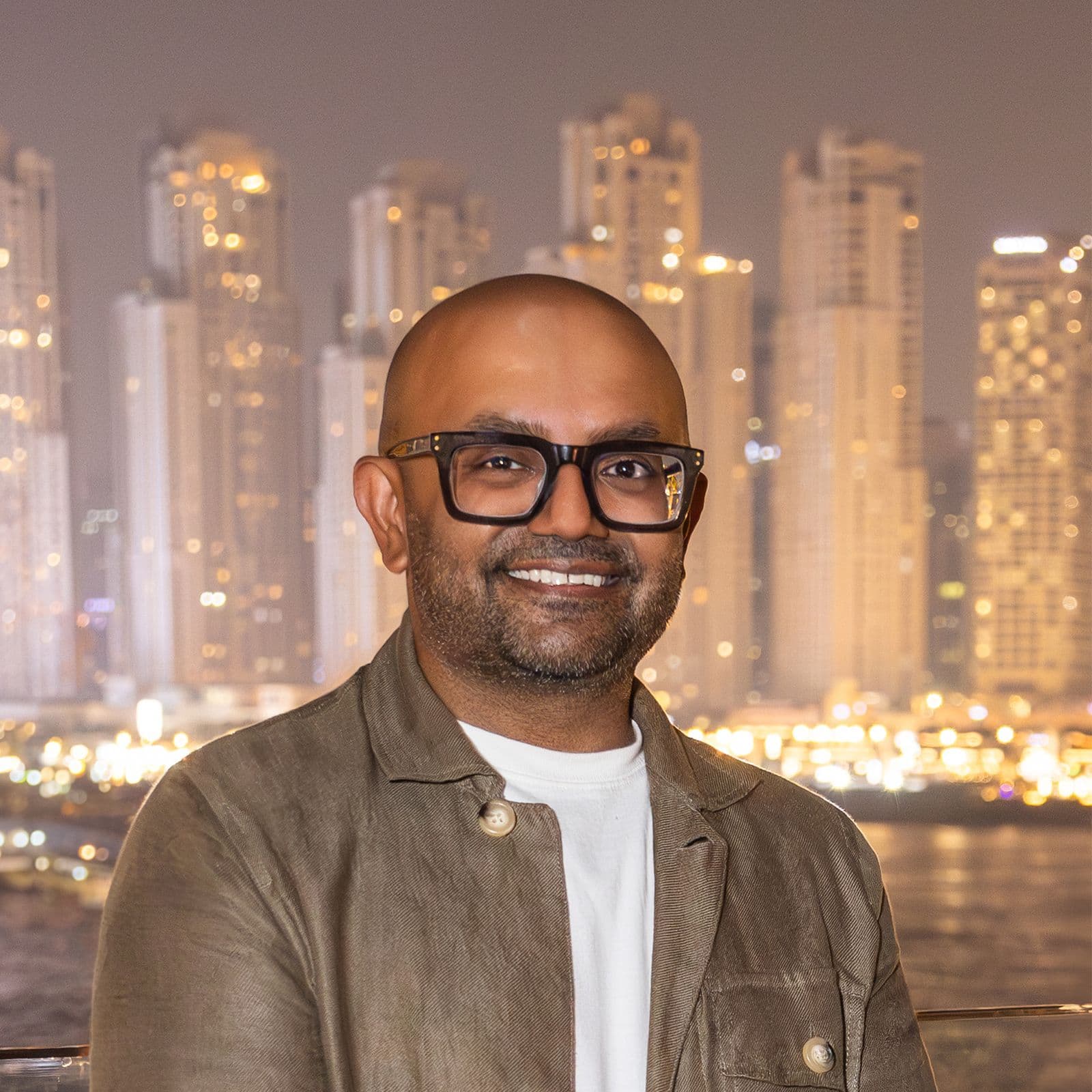
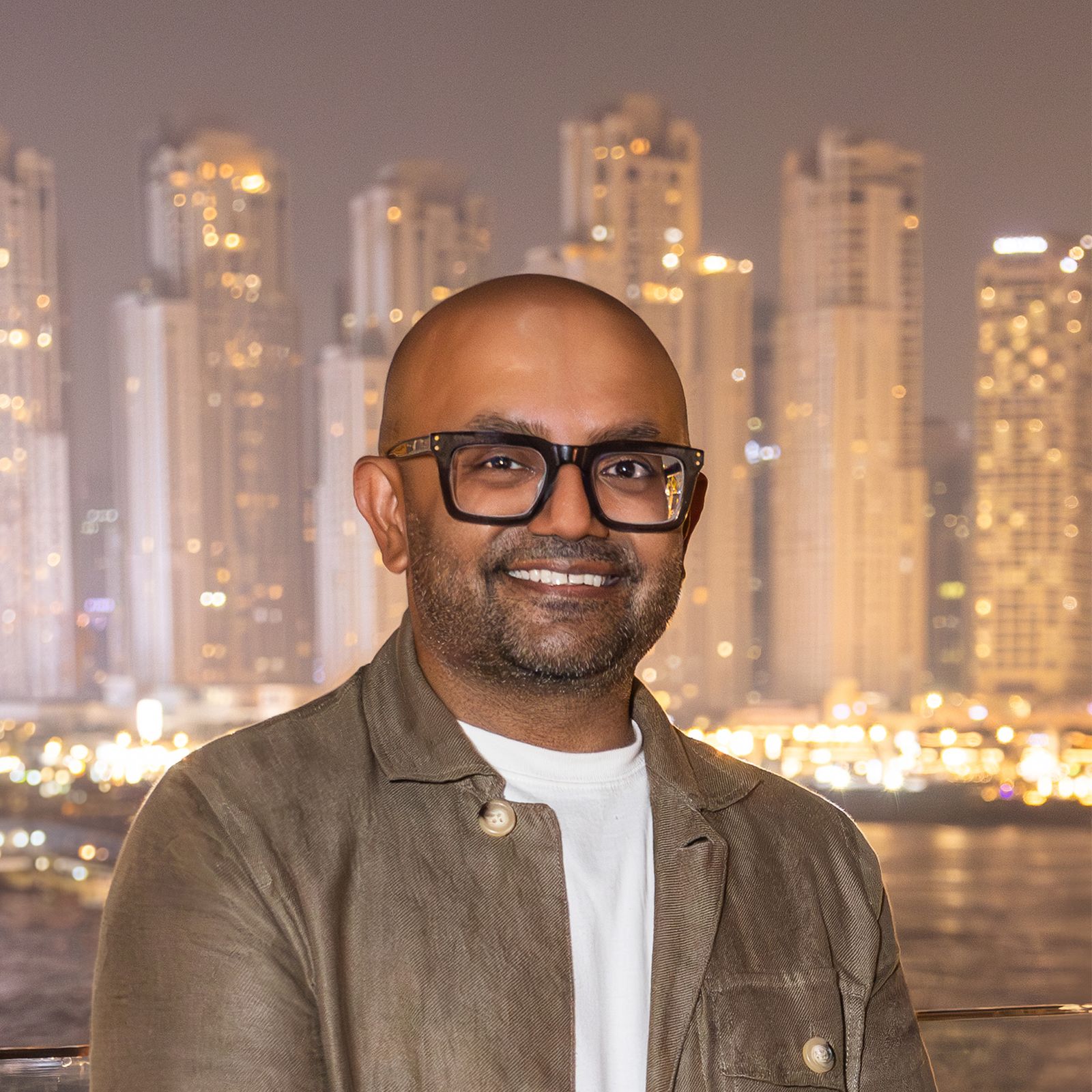 A portrait against a city at night.
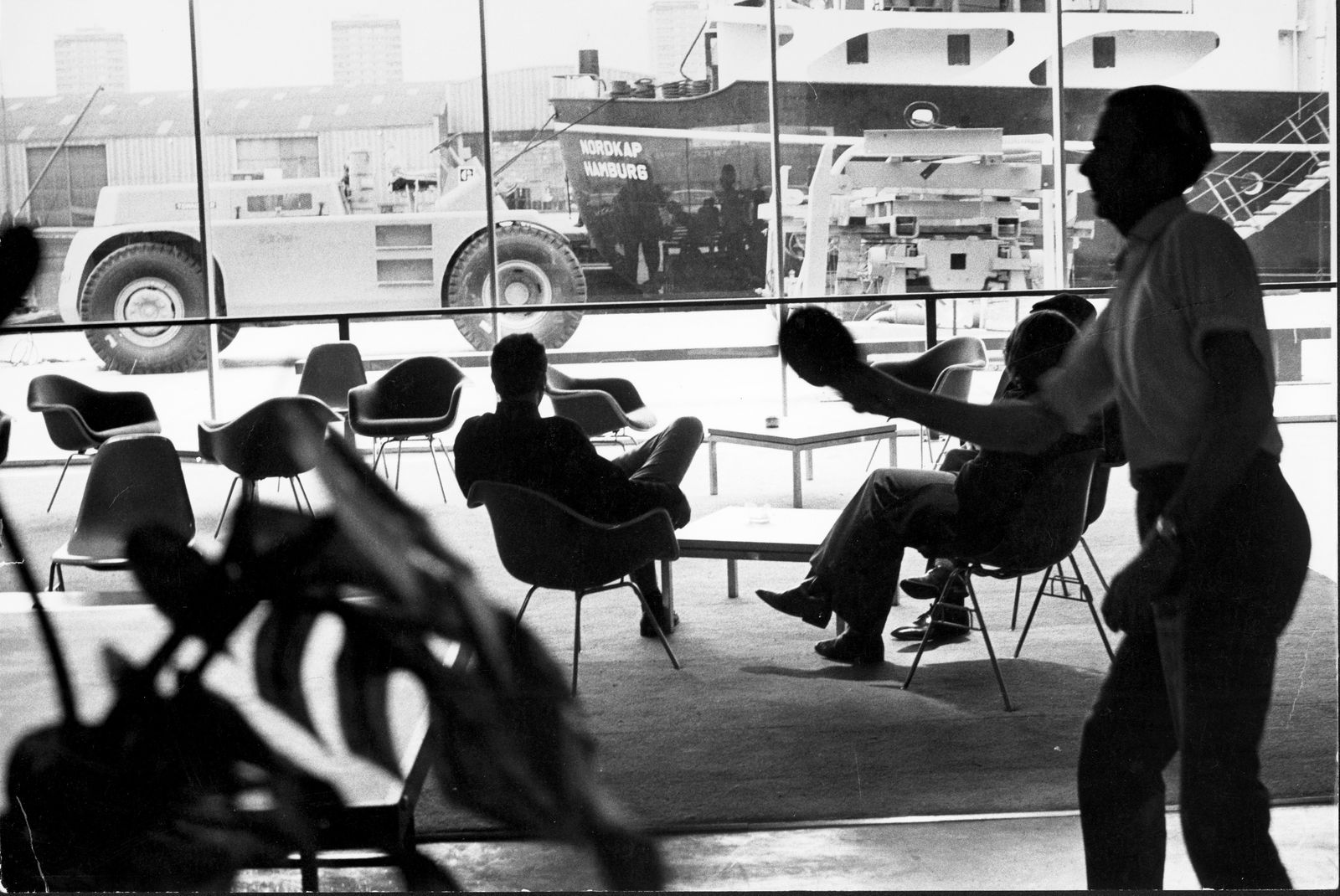 An informal meeting space at the Olsen Amenity Building.
This is the Olsen Amenity Building, one of Foster’s early London commissions. Low chairs invite conversation, and the glazing keeps the working docks in view. Workers are given a place to rest and meet, treated as carefully as the machinery beyond. The furniture and glazing serve that shared daily purpose. Comfort and dignity do not begin with a grand civic gesture; a room with a view and a place to sit can change how a shift feels. The archival image shows the design intention, though not the everyday experience of the people who used it.
In his AD interview, Foster describes design as a way to improve life in both practical and less tangible ways. He was teaching when the dock commission came through a student connection, at a point when his young practice needed work. The more interesting legacy is not the origin story but the question the building poses: who is included in a workplace, and how can its architecture show it?
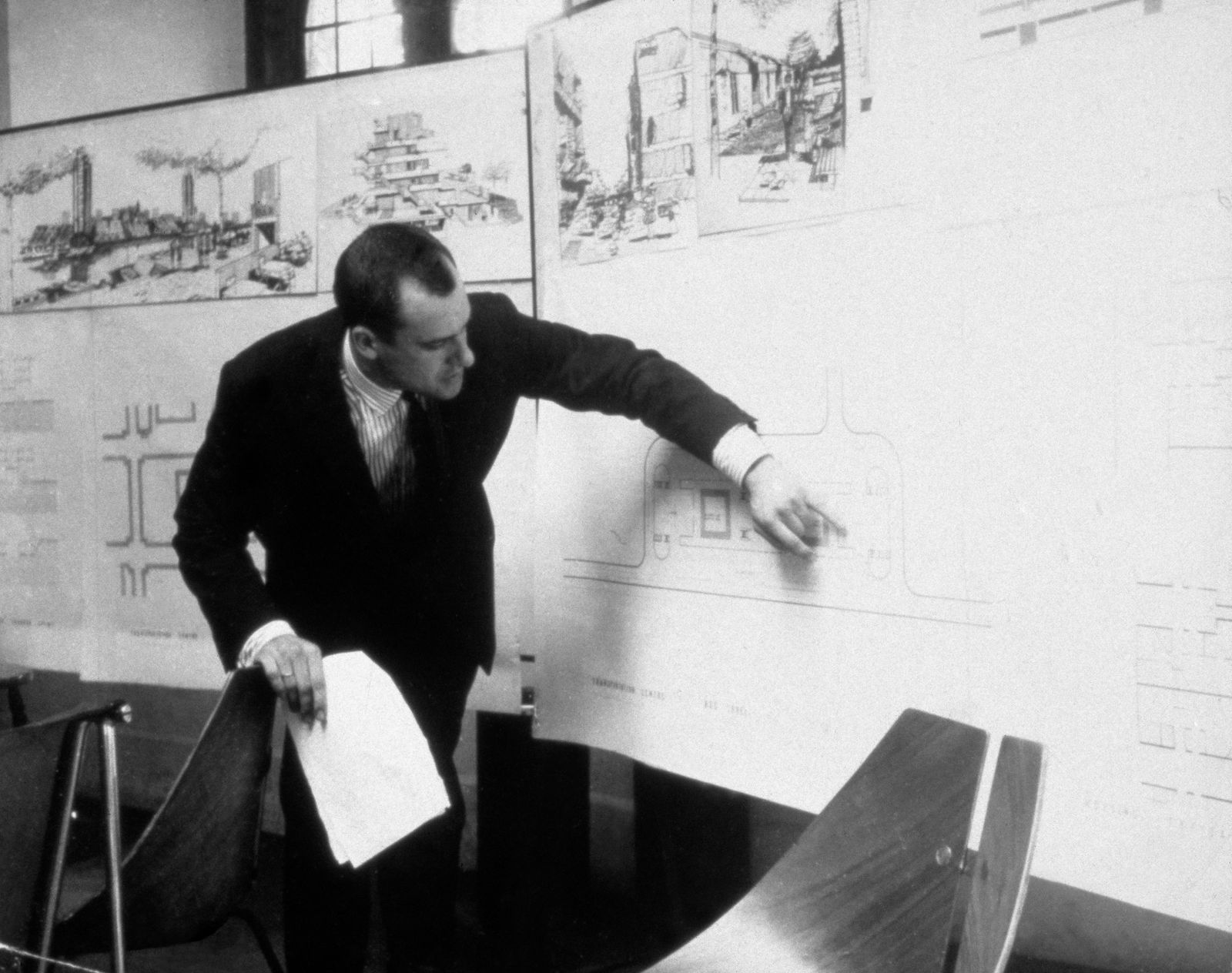 Foster working through a drawing at a studio review.
In an archive photograph, a young Foster leans over a drawing, with other studies pinned behind him. The scene captures attention and revision. It also makes the collaborative nature of architecture visible: a building takes shape through drawings and decisions shared across a team, even when the public later attaches one name to it.
At the Reichstag, the question shifts from workplace to public institution. Visitors fill the ramps around the glass cupola’s central cone. It is a route through the building: people climb, pause, look down, and look out. Foster + Partners says public access and openness shaped the conversion; here, those ambitions become physical experience.
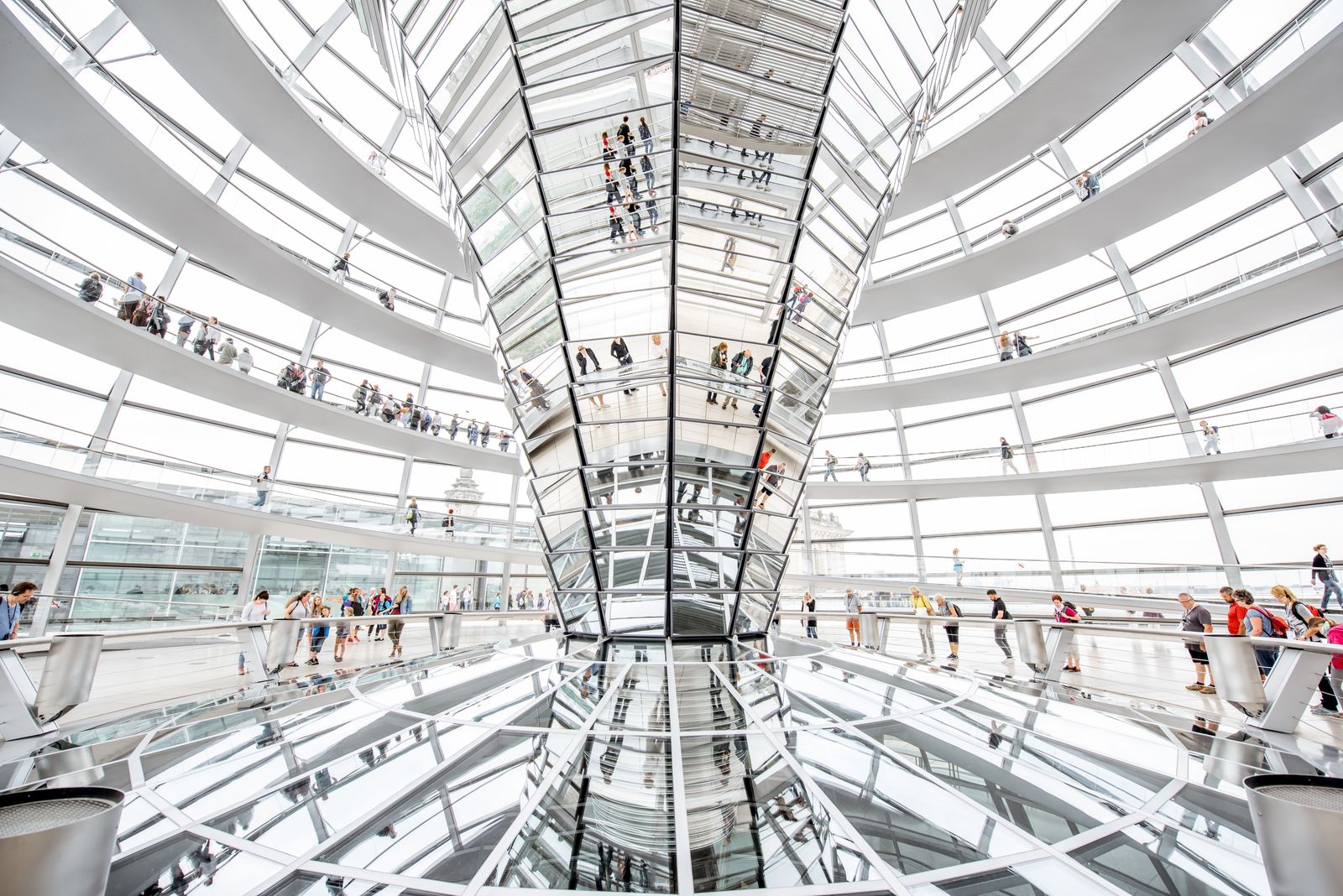 The cupola’s ramps bring visitors above the parliamentary chamber.
Transparency is not accountability: a visible chamber cannot guarantee fair politics. But the cupola changes the visitor’s position, giving the public a place in the institution and a view across the city. Architecture can stage that relationship, even if people must do the harder democratic work.
The Millennium Bridge is another civic gesture. Its deck stays low, holding a clear sightline toward St Paul’s as it links two busy banks. The design was developed with sculptor Anthony Caro and engineers Arup; lateral movement after opening required a retrofit with dampers. That history counters the polished photograph: a public work must answer to people using it, not only to its image or model.
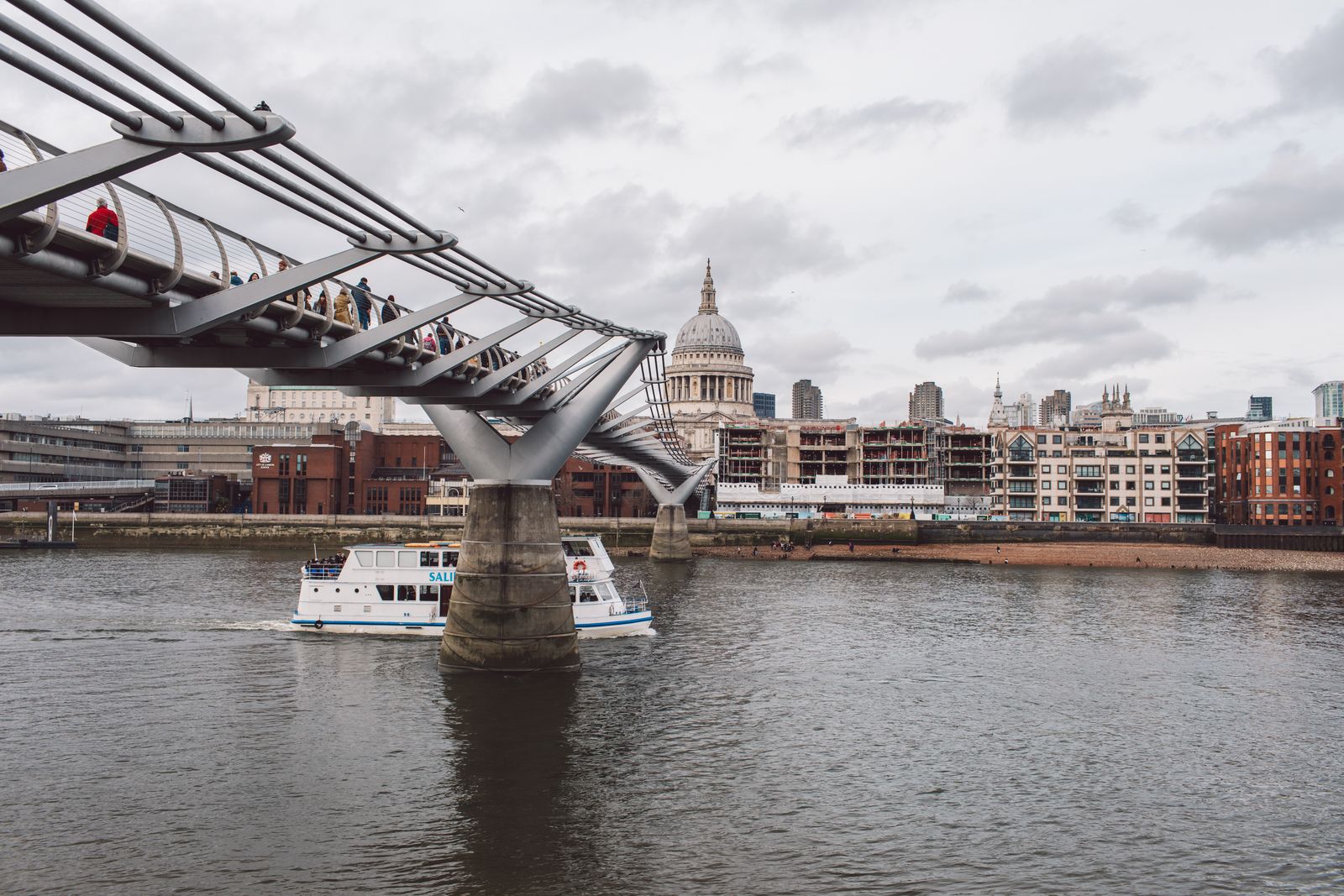 The bridge frames a pedestrian route toward St Paul’s Cathedral.
At Venice’s Arsenale, a ribbed passage narrows toward a bright opening. Seen from inside, the Gateway feels like a short sheltered street. Its pale, faceted frame sets off the old brick buildings across the water. The AD article links its lightweight construction to car design. The photograph leaves a useful question open: does that technical language serve a local need, or chiefly display its own ingenuity?
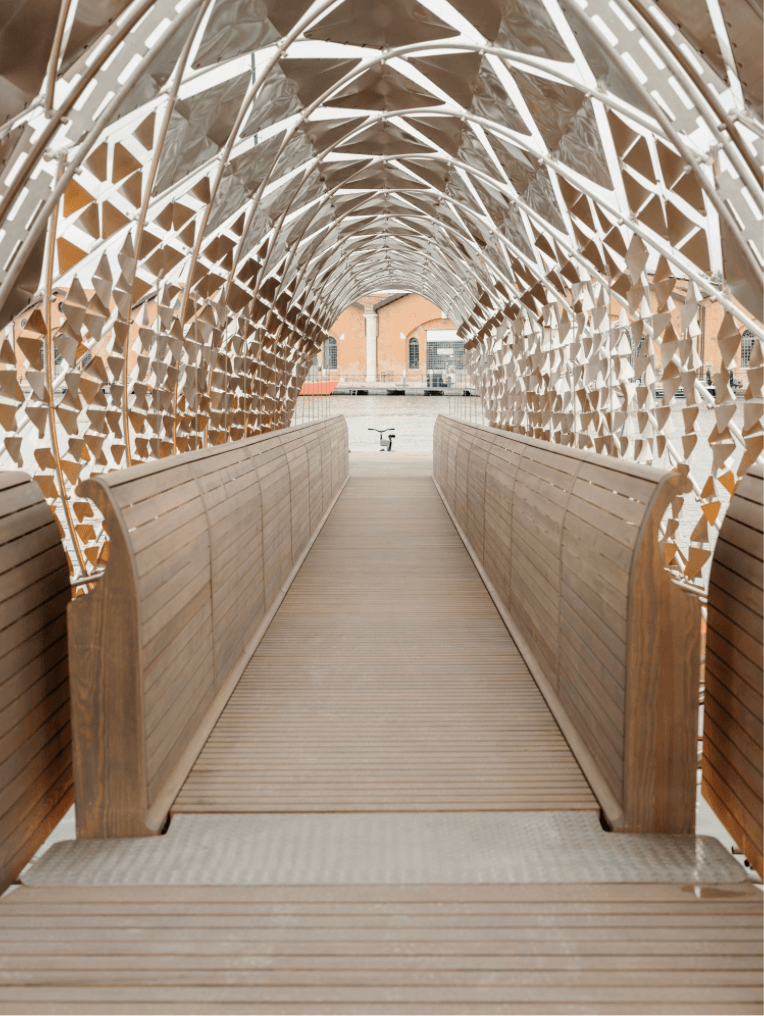 Inside the Gateway, the repeating frame forms a sheltered passage.
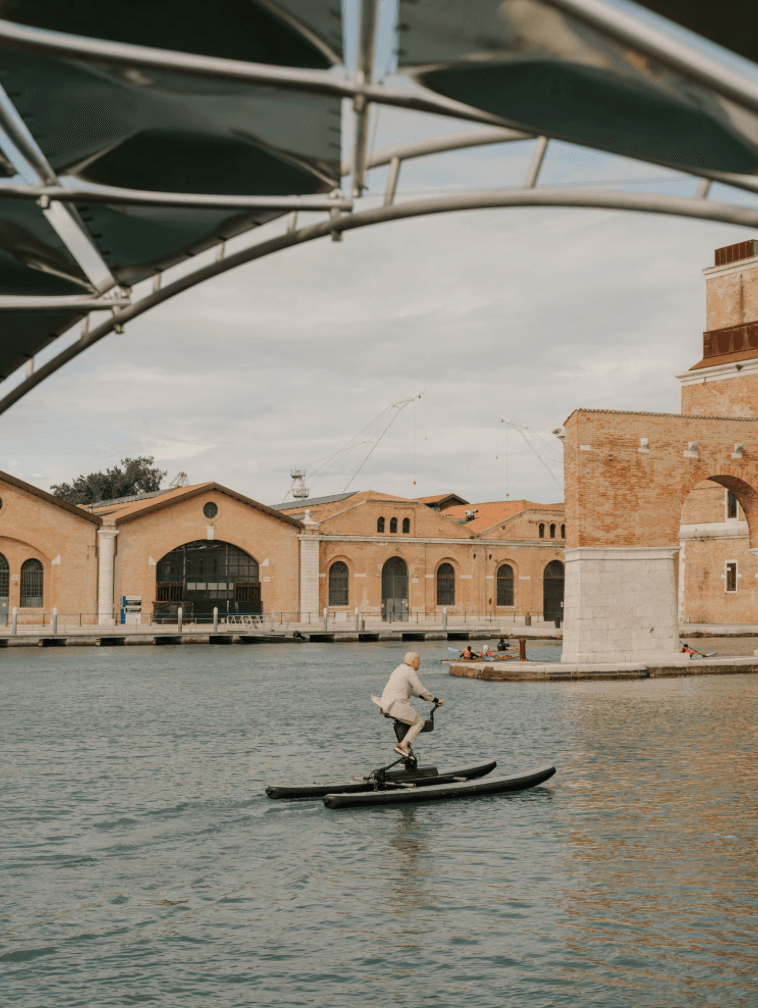 Foster tests a personal mobility device beside the Arsenale.
Foster rides a water bicycle beside the historic waterfront in the next image. It extends the question from buildings to movement, though as a prototype rather than a civic answer. Experiment can open discussion; public value depends on whether a system proves useful, safe, and accessible beyond the photograph.
Asked about AI, Foster says his practice has used it for some time. He then points to digital modeling, especially for community projects, as a way to anticipate effects before building. The interview does not say whether those models are AI-driven. The distinction matters: simulation can help people compare options and surface consequences early, but it inherits the assumptions built into it. It may estimate shade, movement, or energy demand; it cannot decide whose comfort counts, what a neighborhood should preserve, or how much disruption is acceptable. Those remain design judgments and public choices. In community planning, averages can conceal who bears the cost. Clear alternatives and a real chance to influence the outcome matter as much as a legible model.
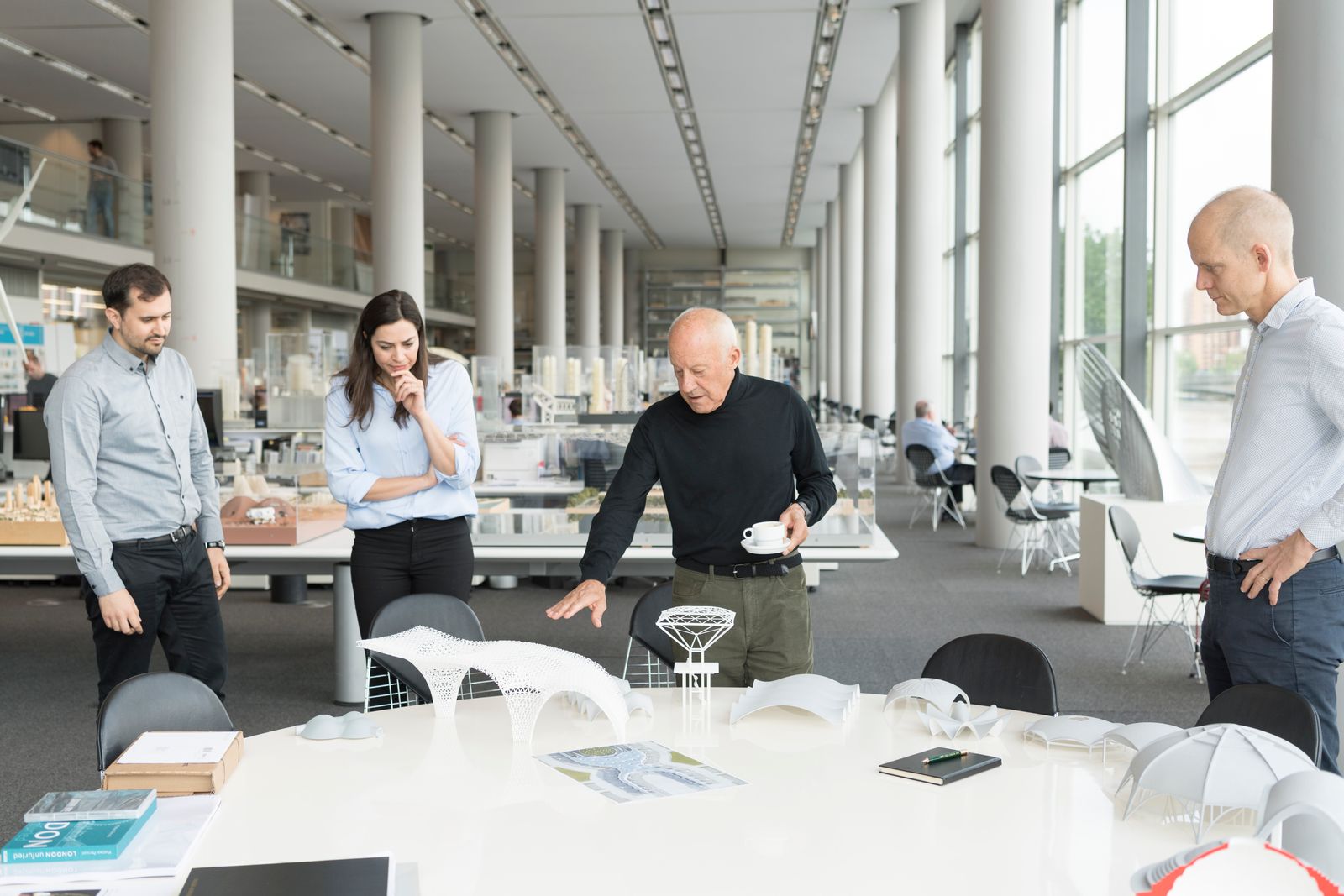 Foster discusses physical study models with colleagues.
The final photograph shows Foster among colleagues and study models, one hand indicating a form on the table. Design appears collective and provisional. Buildings endure; their making involves conversation, tests, and correction.
Foster’s view that cities can recover from crisis is hopeful, though recovery is never automatic or evenly shared. Architecture can make public routes generous, everyday spaces dignified, and environmental choices less costly; it cannot make a city just by itself. These examples are strongest when design widens access—to a workplace amenity, a parliament, a river crossing, or a conversation about change. Good design gives people better places from which to live urban life, and technology can help when it supports that work.