The Theodore Roosevelt Library Takes Shape in the Badlands
Comments
No comments yet. Be the first to comment.
Loading…
No comments yet. Be the first to comment.
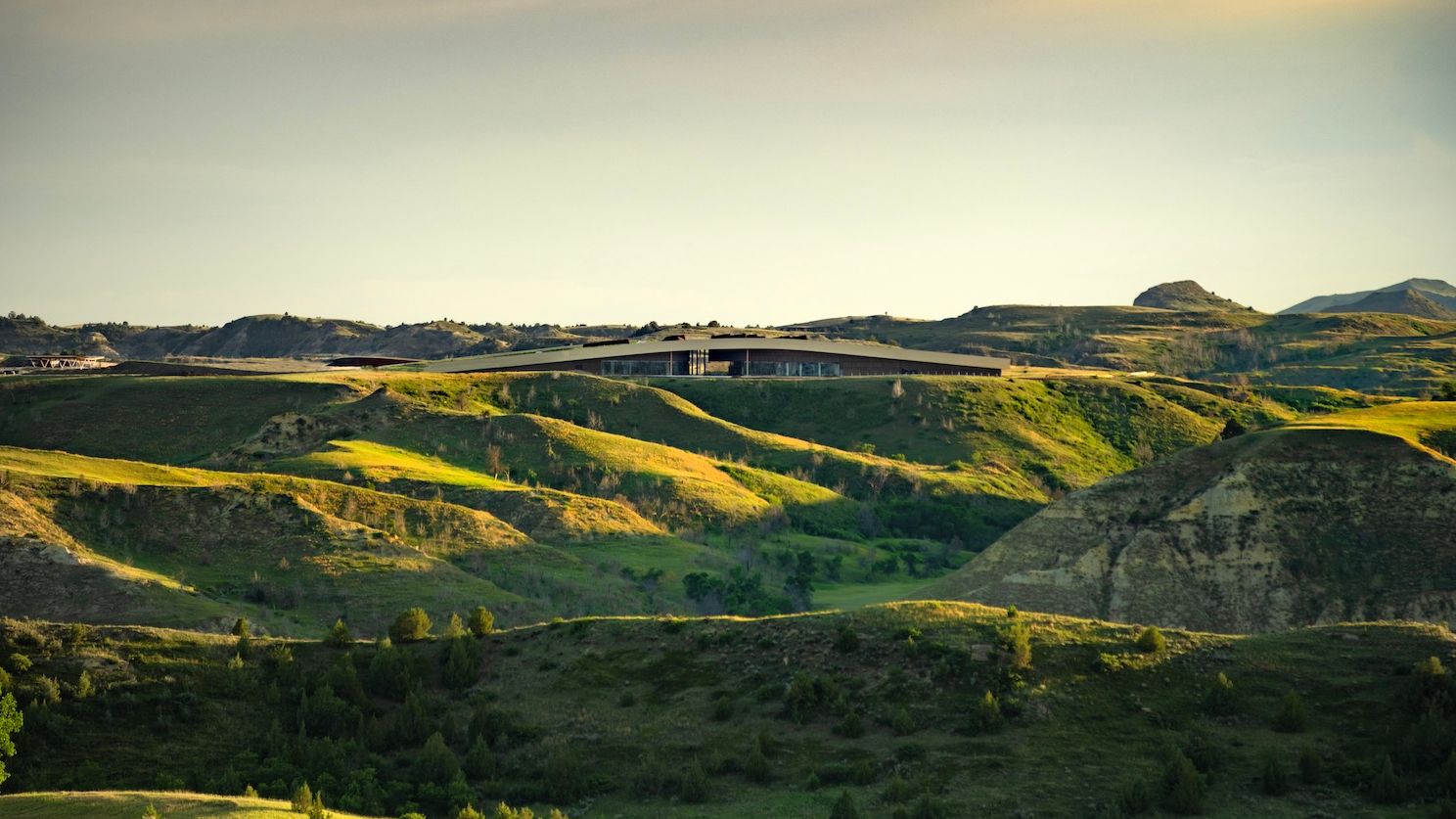
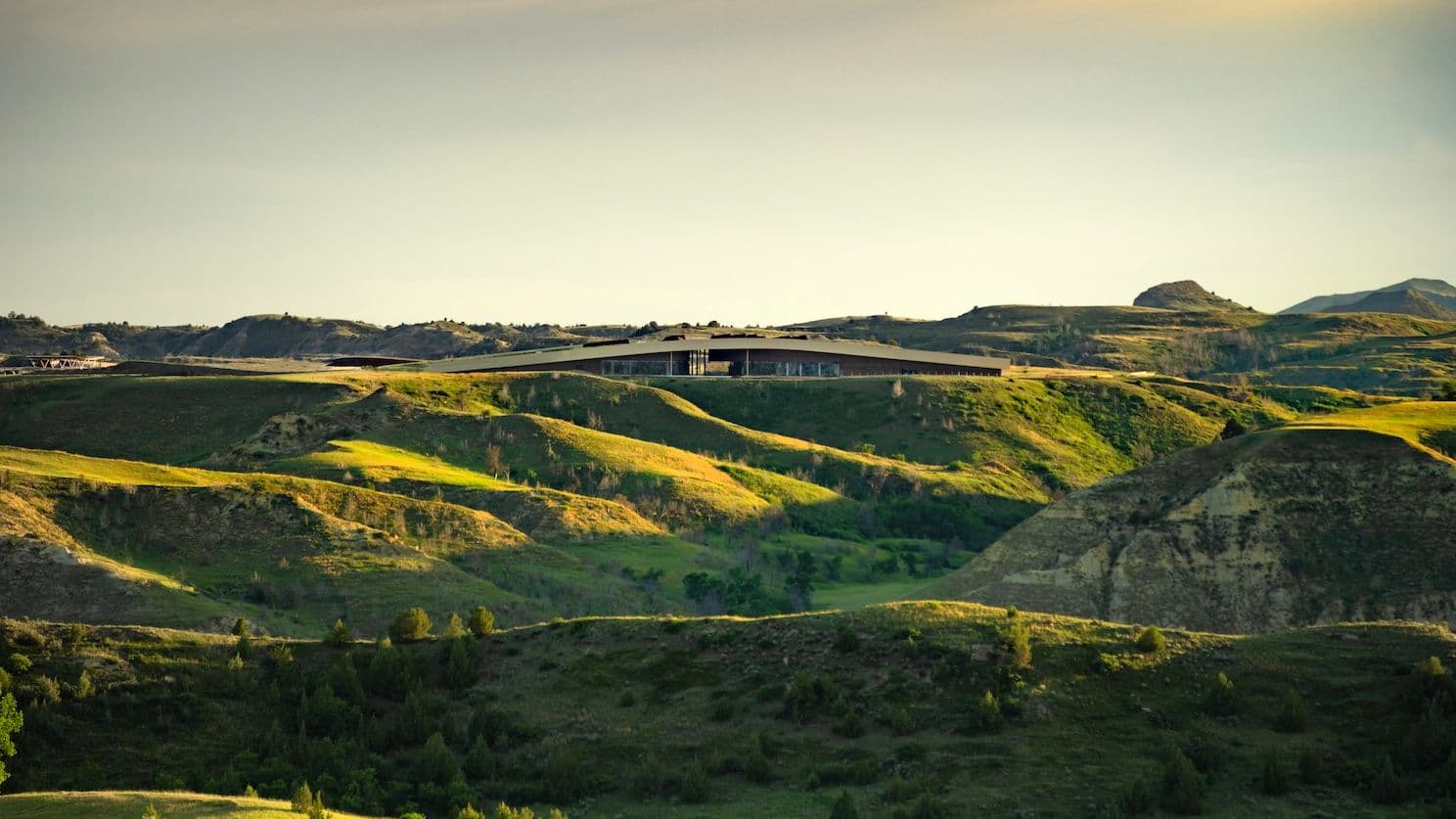
Seen from the surrounding hills, the Theodore Roosevelt Presidential Library reads as a line in the prairie before it reads as a building. Its long, shallow roof follows the rise of the butte, while the glazed band below it lets the land remain visible through the structure. Snøhetta’s design places a 96,000-square-foot institution in the North Dakota landscape that shaped Roosevelt’s early life and later conservation work. The library opened to the public on July 4, 2026; Architectural Digest’s June 29 account captured it just before opening. Roosevelt first came to this region in 1883, then returned a year later after losing his wife and mother. The Badlands became a place of recovery, and later a source for his conservation outlook. Locating the institution here makes that history more than a biographical preface: visitors encounter it through the same open, working terrain.
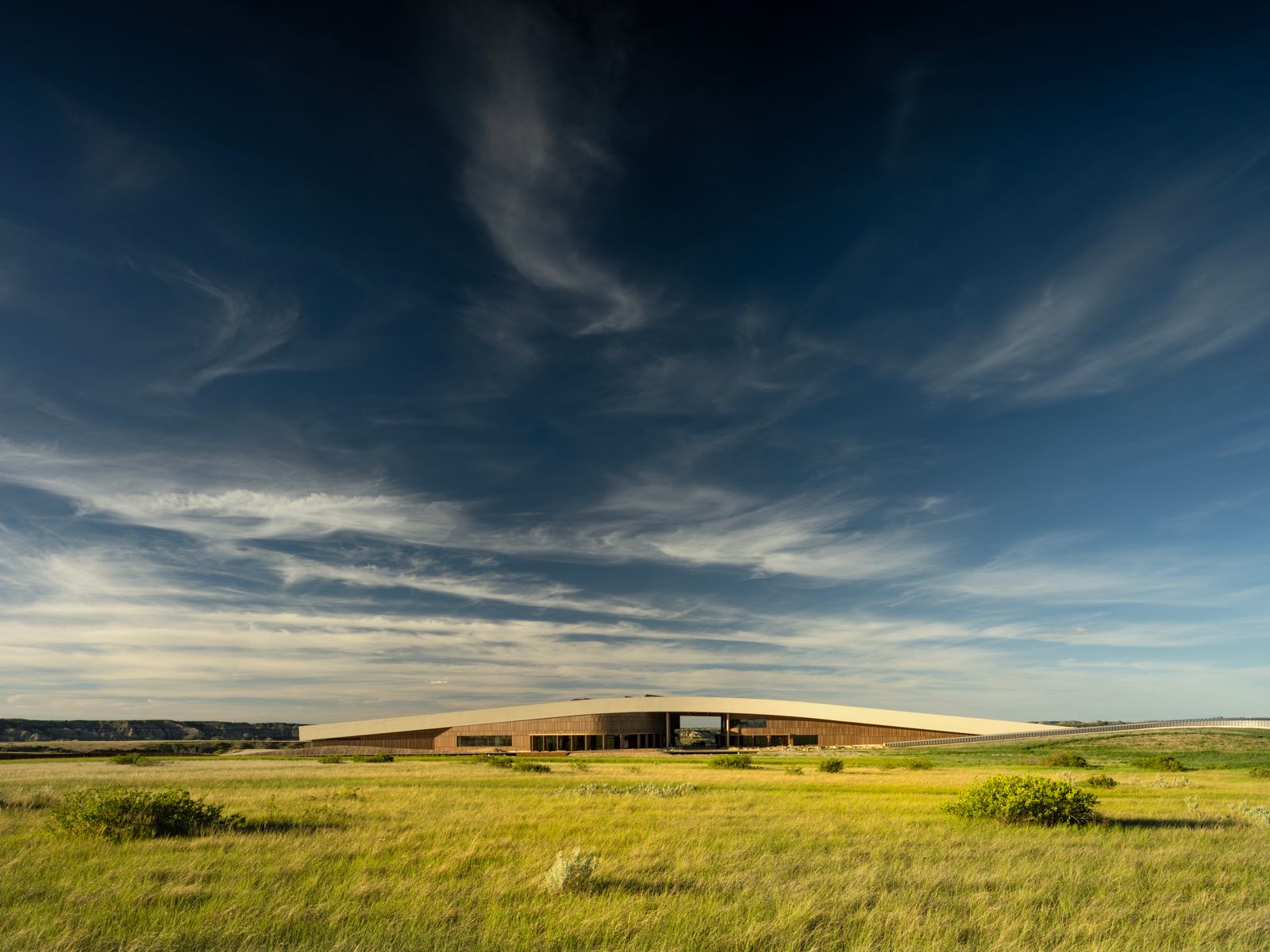
The roof is more than a profile. A planted, walkable surface folds the visitor route over the building and back into the landscape, turning the approach into part of the visit. From a distance the library is subdued, but it is not hidden: the roof’s long edge and dark glazing still mark a deliberate human presence on the ridge. That balance gives the institution a civic scale without making it a conventional monument set apart from its surroundings.
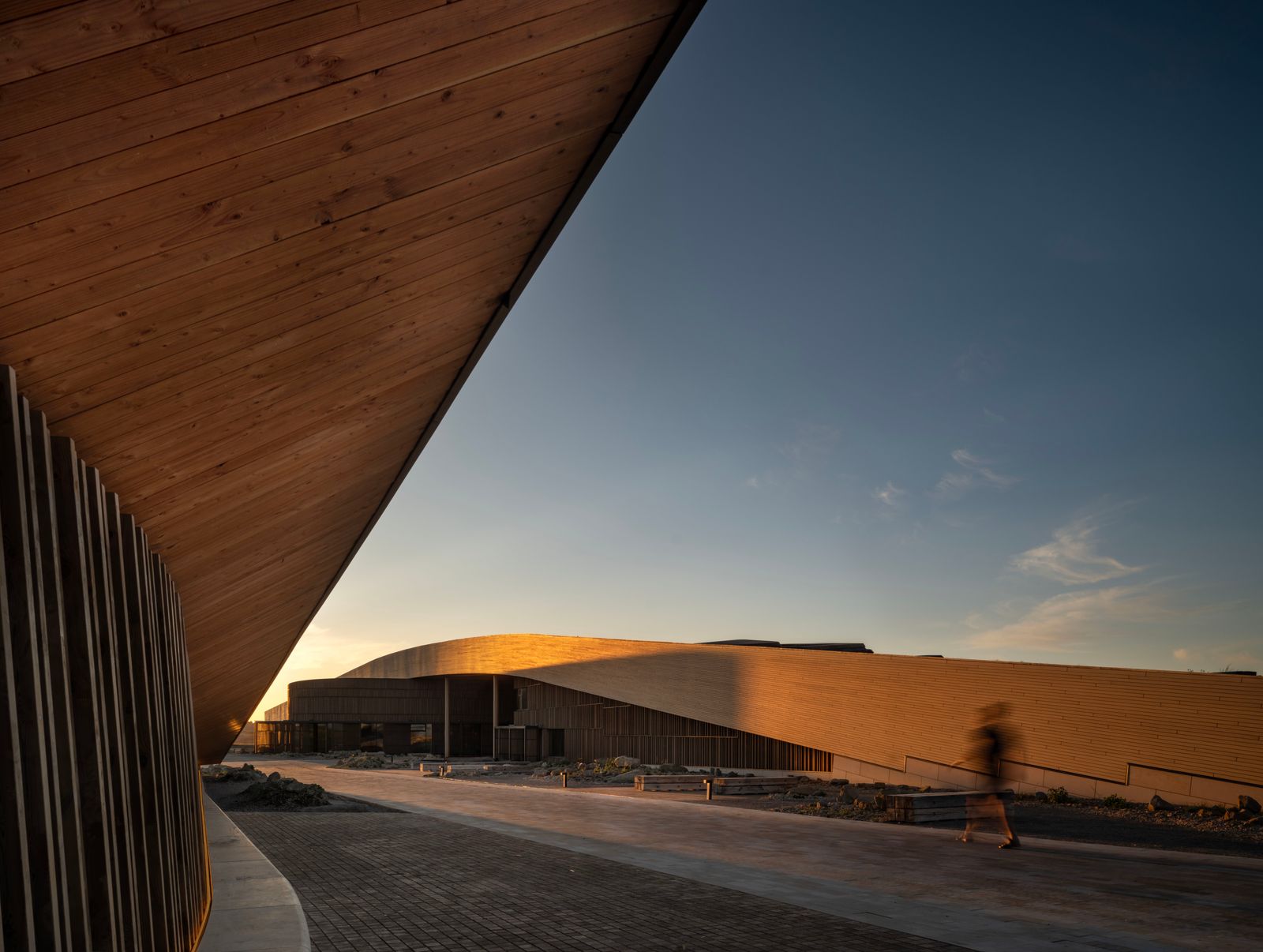
Visitors can arrive by car, on foot, by mountain bike, or on horseback. The main entrance passes through a generous breezeway, yet the grounds do not funnel everyone into the galleries. A one-mile boardwalk threads across the site, linking overlooks, outdoor teaching areas, and an observation net. People can use the landscape for a walk or picnic without entering the museum. The route widens the idea of a library: the exhibits tell Roosevelt’s story, while the place around them offers a slower, less directed way to encounter the subject.
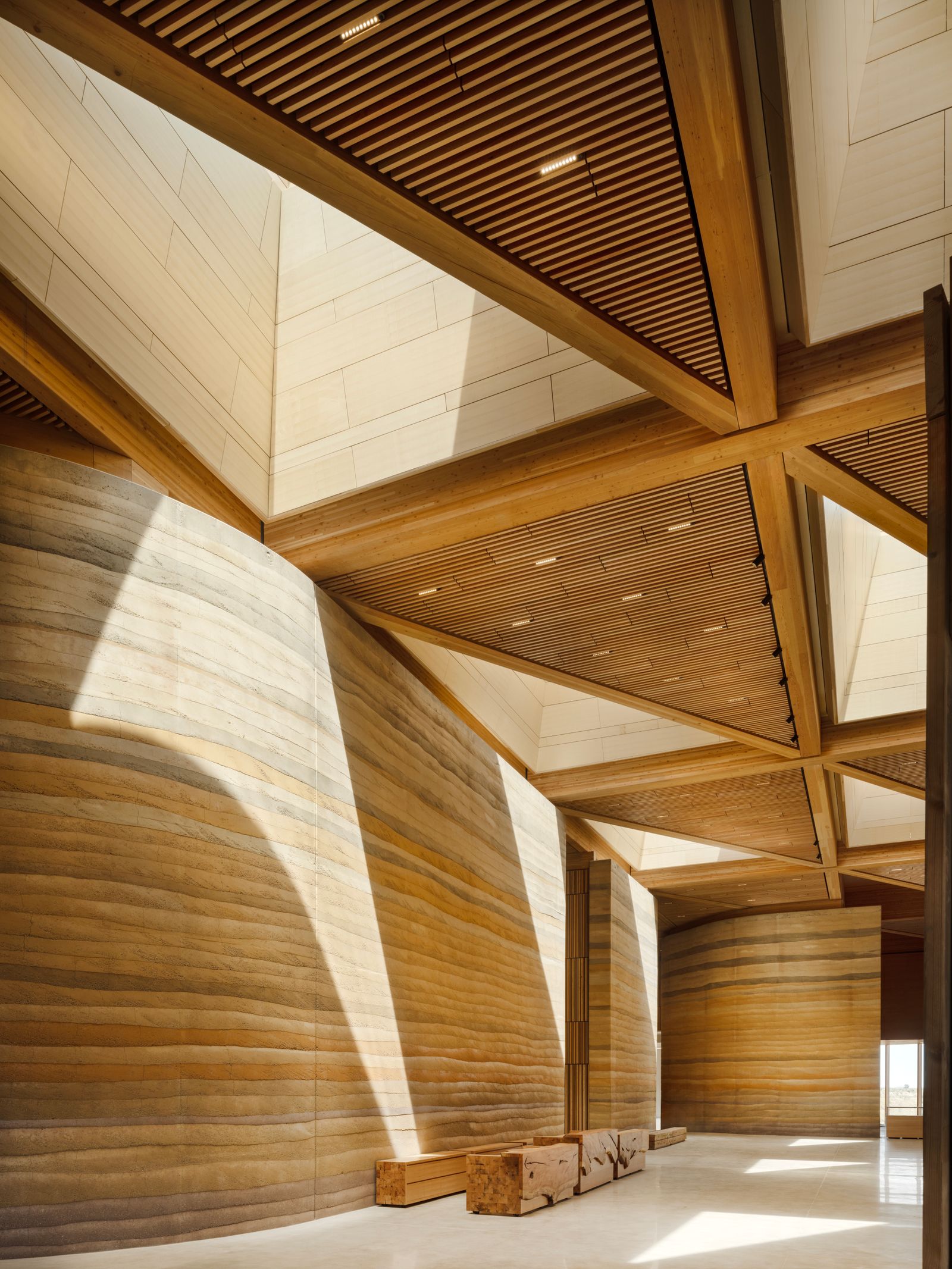
Inside, the material palette keeps the landscape close. Rammed-earth walls, formed from local sediment with pigment and a small cement binder, hold visible horizontal layers; mass timber spans overhead. The earth’s thermal mass helps temper temperature swings, so the wall does practical work as well as giving the galleries a weight and texture that connect them to the Badlands. Digital and interactive exhibits, developed by Local Projects, Dimensional Innovations, and the Future of StoryTelling, fill the building with a different kind of material: stories, images, and records. The galleries range across Roosevelt’s curiosity about nature, his Elkhorn Ranch, and his presidency, including the conservation standards he set. The contrast gives the experience two registers, one tactile and grounded, the other changeable and interpretive. A digital archive also lets the institution work as a resource beyond the visit, even as the physical setting remains central to the experience.
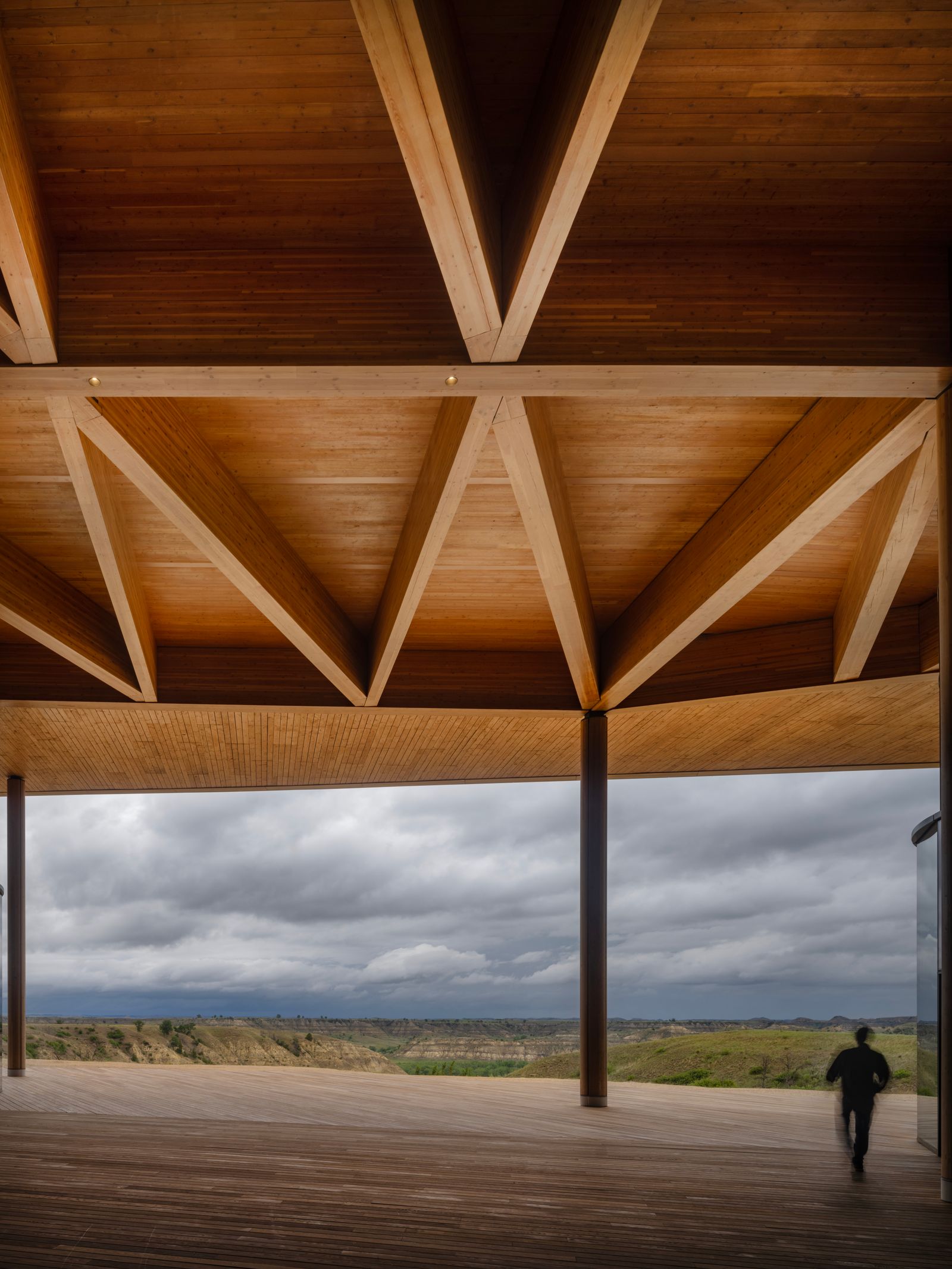
The auditorium’s picture window brings the distant landscape into the room behind the stage. That view can make a talk feel tied to its setting, though it also means the backdrop will shift with the weather and daylight. Elsewhere, a café, classrooms, permanent galleries, and flexible exhibition space support visits of different lengths. The institution is arranged less as a single ceremonial sequence than as a set of indoor and outdoor choices.
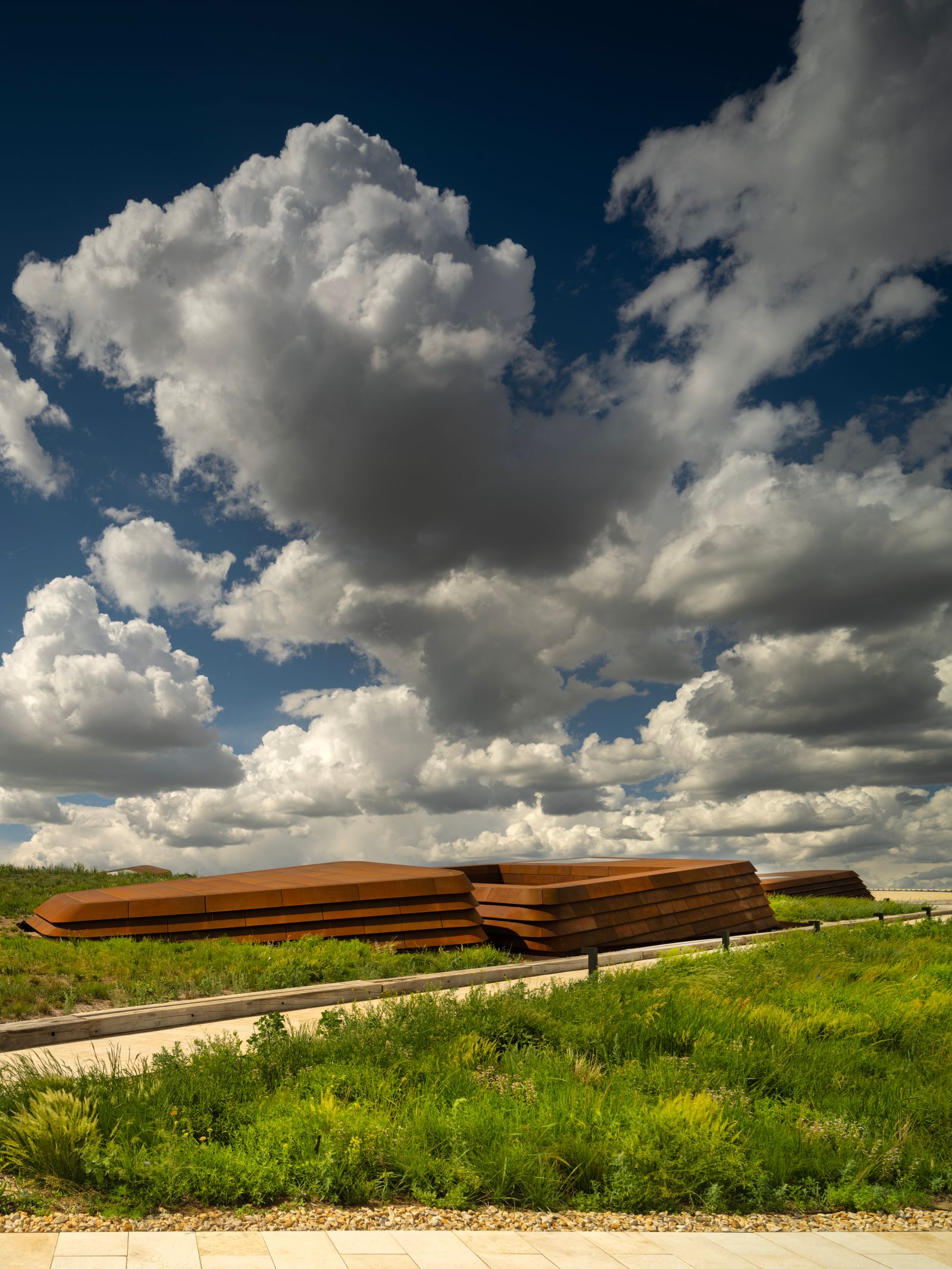
The landscape plan extends beyond planting a roof. The grounds include 400,000 native seedlings collected by local volunteers and grown by North Dakota State University. Snøhetta’s team describes the site as a working landscape, maintained through controlled burns and modified grazing intended to echo the historic role of bison. The strategy treats ecological care as an ongoing practice, not a finished image. It also asks the museum to accept change: grasses grow, burns alter the ground, and the route through the site will meet a living landscape rather than a fixed garden.
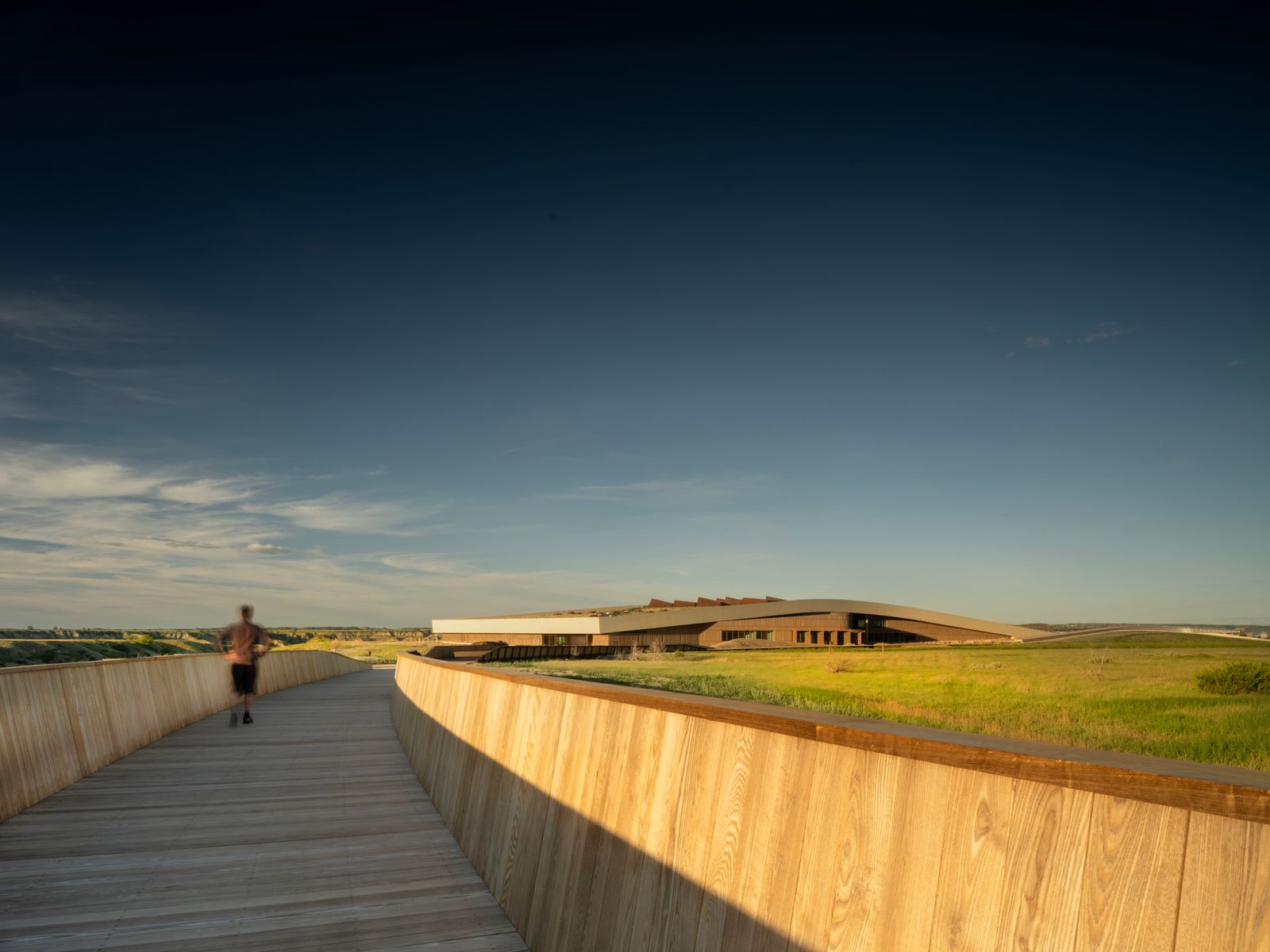
The building’s environmental systems make a similar attempt to connect ambition with operation. Geothermal wells, solar power, low-energy heating and cooling, radiant floors, and a fireplace contribute to its goal of self-sufficiency. The project is designed to generate about a quarter of its renewable energy on site, with the remainder supplied by off-site solar. The library also sits close to existing National Park facilities and infrastructure, a siting choice intended to limit disruption to the land. The energy plan is ambitious, though its performance will depend on how the building is operated over time. Those measures do not erase the impact of building a large cultural institution, but they make the stated conservation message legible in its structure, materials, and energy plan.
The most persuasive decision is to let access remain open-ended. A visitor may study the exhibits, climb the roof, follow the boardwalk, or simply pause at an overlook. That freedom keeps the library from being only a container for presidential history. Its architecture asks people to move through the same terrain that informs the story, and to notice that conservation is not an abstract legacy here; it is a question of how the land is used and cared for now.